The Overhead Light Trap: Why Your Living Room Feels Sterile
Walk into most living rooms, and you'll see the same problem: one overhead fixture, usually a ceiling chandelier or recessed lights, doing all the heavy lifting. The result? A space that feels clinical, exhausting, and somehow both too bright and not quite right.
This is the overhead light trap, and it's one of the most common—and most fixable—mistakes in home design.
The problem isn't the overhead light itself. It's that overhead lights alone create harsh shadows, eliminate depth, and make rooms feel performative rather than livable. Your eyes work harder. Your brain registers "institutional" instead of "sanctuary." And no amount of throw pillows or careful paint color can fully fix what broken lighting does to a space.
The solution isn't glamorous. It's not a trend, and it won't show up in your Instagram stories. But I'm going to say it anyway because I believe it matters more than almost any other design decision you'll make this year: your living room needs layered lighting, and ambient lighting is the layer most people skip.
This isn't opinion masquerading as fact. This is the accumulated evidence of a thousand living rooms that transformed the moment someone added a single well-placed lamp.
The Science of Layered Lighting: Ambient, Task, and Accent Explained
Interior designers talk about three types of lighting, and understanding the difference between them changes everything about how you approach lighting design.
Ambient Lighting: The Foundation
Ambient lighting is the baseline illumination of a room—the gentle, even glow that lets you see and move safely without shadows or strain. It's supposed to feel natural, almost invisible. Most importantly, ambient lighting should come from multiple sources positioned around the room, not from a single point overhead.
In a well-lit living room, ambient lighting accounts for maybe 50-60% of your total light, and it's what separates "nice place to spend time" from "place where I feel obligated to perform."
Task Lighting: Functional Light for Specific Activities
Task lighting is direct, focused light for specific jobs: reading, working, crafting. A reading lamp beside a chair, light above a desk—these are task lights. They're bright and intentional, but they're localized. You need them, but you don't want them everywhere.
Accent Lighting: The Drama
Accent lighting highlights architectural features, artwork, or design elements. It creates visual interest and depth. A picture light, uplighting behind shelving, spotlighting a gallery wall—these create dimension and make a room feel designed rather than decorated.
Most living rooms have task and accent lighting figured out reasonably well. What nearly everyone misses is the ambient layer—the quiet, distributed light that makes a room feel like a place you want to *be*, not just a place you look at.
"The moment you add proper ambient lighting, you stop seeing your room as a collection of decorated surfaces and start experiencing it as an actual space where life happens."
Enjoying this article?
Get curated picks in your inbox every Sunday.
Three Ways to Add Ambient Lighting Without Renovation
The best part about ambient lighting is that you don't need to rewire your house, install recessed lighting, or wait for an electrician. Here are three practical approaches that work in any living room, right now.
Strategy 1: Floor Lamps in the Corners and Along Walls
This is the simplest, most immediately effective solution. Floor lamps positioned in the corners and along the perimeter of your room create distributed light that fills the space evenly. The key is choosing lamps with diffused shades—fabric lampshades, frosted globes, or indirect lighting designs that scatter light rather than direct it.
Look for lamps with warm color temperatures (2700K-3000K) that mimic the feeling of natural light at dusk. Position them so the light bounces off ceilings and walls rather than shining directly into your eyes. A well-placed corner lamp completely changes how a room feels, and it costs less than most people spend on a single piece of art.
For living rooms that need serious light recovery, an indirect lighting lamp designed specifically for brightness can be transformative. These lamps use clever diffusion to deliver significant illumination without the glare that makes you feel like you're in an interrogation room.
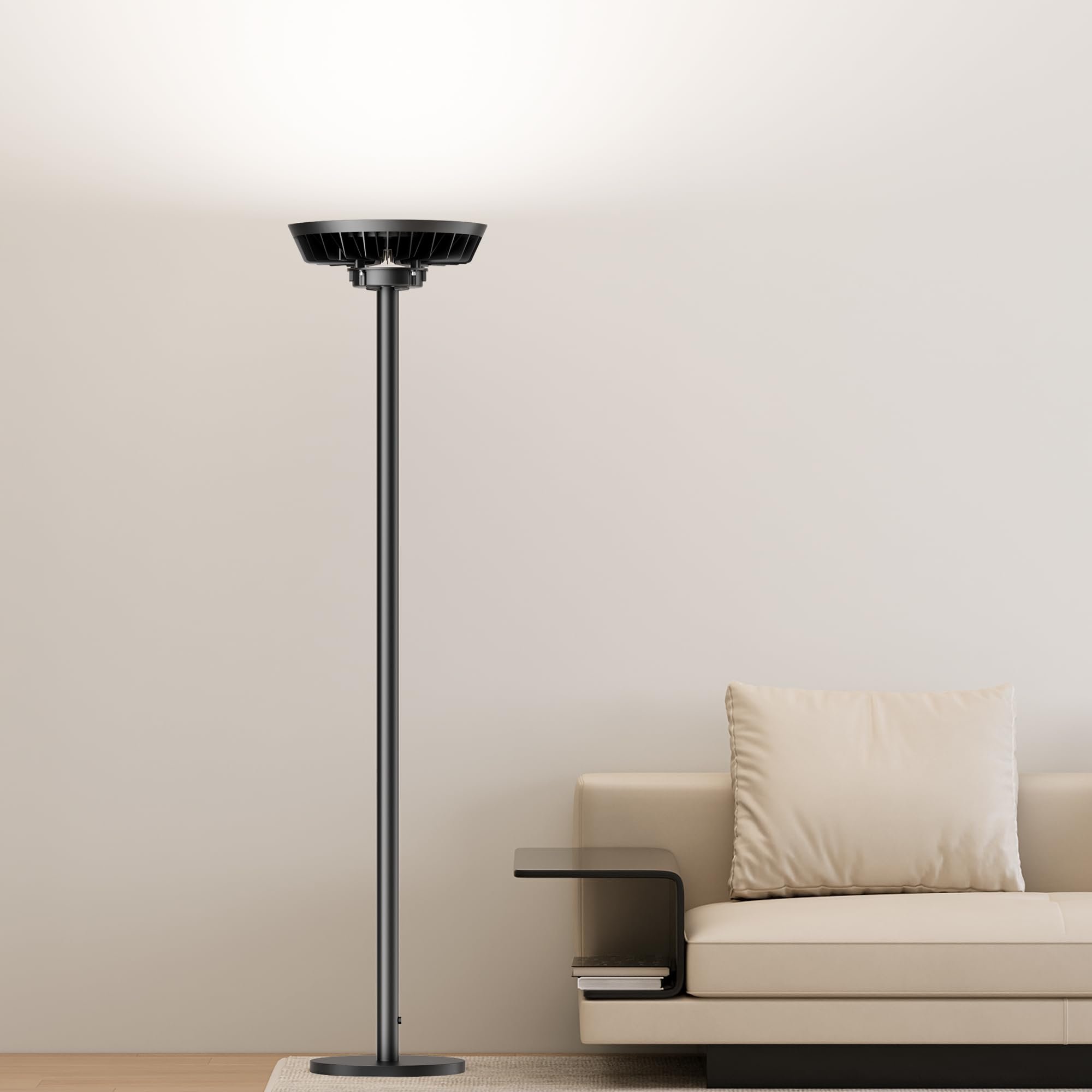
Homelist The Brightest Indirect Lighting Floor Lamp, 500W 40000LM Super Bright Floor Lamp for Dark Room, No Glare Standing
$539.99
If your living room is genuinely dark or north-facing, this indirect lamp delivers serious ambient brightness without the harsh glare of traditional bright fixtures. The 40000LM output combined with indirect design means you get powerful ambient light that feels natural.
See Today’s Price →For most living rooms, a more budget-conscious approach works beautifully. Pair multiple softer floor lamps—the kind with fabric shades and warm bulbs—strategically around the room. You're creating pools of light that overlap to create even ambient illumination without any single fixture dominating.
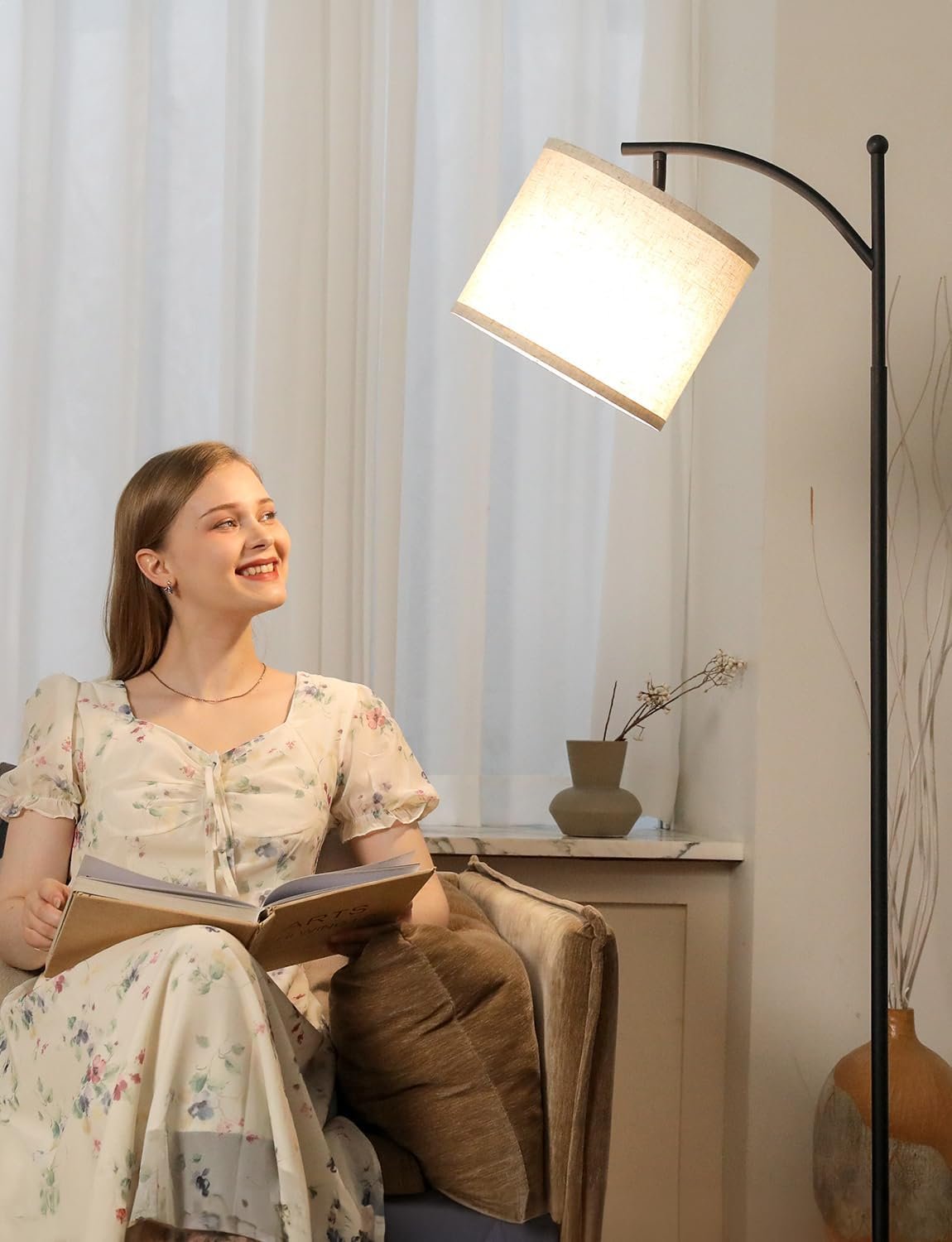
Ambimall Tall Floor Lamps with 3 Color Temperatures Bulb & Adjustable Linen Shade, for Living Room, Bedroom, Office, Classic
$29.99
This is the kind of lamp that deserves to be everywhere. The adjustable linen shade, multiple color temperatures, and classic design mean you're not buying a lighting solution—you're buying flexibility. Buy two or three, position them around your room, and watch your space transform.
See Today’s Price →Strategy 2: Wall Sconces and Uplighting
Wall sconces—light fixtures mounted directly on walls—are phenomenal for ambient lighting because they deliver light at eye level (or above), which feels more natural than light only coming from the floor or ceiling. A pair of sconces flanking a mirror or piece of art not only adds light but creates symmetry and intentional design.
Uplighting is slightly different: small lights positioned on shelves, tables, or the floor pointing upward to illuminate walls and ceilings. This technique is subtle but incredibly effective. It creates a sense of spaciousness and makes the room feel intentionally designed rather than lit.
Both of these approaches work beautifully with plug-in fixtures that don't require hardwiring, though permanent installation obviously gives more design flexibility.
Strategy 3: Table Lamps on Side Tables and Console Tables
A well-placed table lamp on a console behind your sofa, on a side table near seating, or on a bookshelf creates intimate ambient light that feels intentional. Table lamps with fabric shades scatter light effectively and contribute to the overall ambient layer without being too bright or too dim.
The advantage here is flexibility. A table lamp can move with you. It contributes to ambient light without being a permanent design decision. And a quality lamp becomes a design object in itself—something that looks thoughtful and intentional even when it's off.
How Mirrors and Reflective Surfaces Multiply Ambient Light
Here's something that separates rooms that glow from rooms that merely have light: strategic mirrors and reflective surfaces.
A well-positioned mirror bounces light around a room, effectively multiplying your ambient lighting without adding a single fixture. This isn't magic—it's physics. But it feels like magic when you realize that a large mirror opposite a floor lamp can distribute that light to parts of the room the lamp alone would never reach.
This is particularly powerful if your living room is small or doesn't have ideal wall space for multiple lamps. A large mirror opposite a window amplifies natural light. A mirror opposite a lamp multiplies ambient light. And a mirror positioned to reflect light around architectural features creates dimension and visual interest simultaneously.

Hamilton Hills 36" x 24" Classic Gold Framed Polished Glass Top Round Corner Mirror - Thick Arched Top Rich Wall Mirror
$219.99
Beyond just reflecting light, a statement mirror like this becomes a design anchor that elevates the whole room. The polished glass and gold frame are sophisticated without being trendy, and the size is substantial enough to genuinely amplify ambient light throughout the space.
See Today’s Price →Beyond mirrors, reflective surfaces matter too. Glossy tabletops, glass shelving, metallic accents—these all contribute to distributing ambient light more evenly throughout your space. This is why "shiny" surfaces sometimes feel more luxe and spacious than matte finishes: they're literally reflecting light.
This isn't about making your living room look like a disco. It's about understanding that how light moves through a space matters as much as where the light originates.
The Comfort Test: Why Layered Lighting Changes How You Feel in a Room
There's a reason designers talk about lighting as one of the most important elements of interior design: it directly affects your nervous system.
When a room is lit exclusively by overhead lights, your pupils constrict more. Your eyes work harder to process the harsh shadows and uneven illumination. Your brain registers the environment as more stimulating, more public, less restful. Over time—even if you're not conscious of it—this creates mild stress.
Layered ambient lighting does the opposite. Soft, distributed light from multiple sources allows your pupils to dilate naturally. Shadows are softer. Your eyes relax. Your brain recognizes safety and comfort. The same room, with the same furniture, feels fundamentally different to inhabit.
"Lighting isn't decoration. It's the single most powerful tool you have to change how a space feels to live in."
This is why people say things like "I don't know what it is, but this room just feels so comfortable" or "Something about this space is exhausting." Usually, it's the lighting. People feel it in their bodies before they can name it.
Think about your favorite spaces outside your home—a good restaurant, a hotel lobby you love, a friend's living room where you actually relax. I guarantee you the lighting is layered. I guarantee there are multiple light sources creating soft, overlapping illumination. I guarantee you feel invited to stay, to linger, to be comfortable.
Your own living room deserves that same intentional approach.
Budget vs. Investment: When to Splurge on Quality Ambient Lighting
You can create functional layered lighting on almost any budget. Three $30 lamps from different brands, positioned strategically, will dramatically improve your space.
But there's a real difference between functional lighting and lighting that feels special.
Quality matters most in fixtures you'll use every single day. If you're going to look at and use a floor lamp eight hours a day, the difference between a $30 lamp and a $150 lamp compounds. Better materials, better shades, better bulb quality, better design—these accumulate over months and years into a tangible difference in how you experience your space.
Similarly, if your living room is genuinely dark or difficult to light (north-facing, small windows, high ceilings), investing in a high-powered ambient lamp that solves the actual problem is smarter than buying three mid-tier lamps that still leave the room feeling dim.
Here's my honest guidance: Start with lamps in the $30-80 range positioned strategically. If that solves your problem, you're done. If your room is still too dim, or if a particular lamp doesn't feel right after a few weeks, then consider investing in something higher-quality that you genuinely love. You'll use it for years.
The same applies to mirrors and reflective surfaces. A basic mirror does the job. A beautiful mirror that you love looking at becomes part of your room's design story, not just a functional object. If you're going to hang something large and permanent, it's worth spending a bit more for something that genuinely appeals to you.
One more consideration: lighting works best as a whole system. Choosing lamps you genuinely like—that match your style, your color palette, your room's aesthetic—matters. A lamp that's the perfect brightness but looks awkward in your space will eventually feel like a compromise. Buy fixtures that you'd want to look at even if they weren't providing light.
Putting It All Together: A Practical Roadmap
If you're ready to transform your living room lighting, here's the order I recommend:
Step 1: Audit what you have. Identify your existing light sources. What's overhead? What's task lighting? What's accent? You're looking for gaps in ambient light.
Step 2: Add one floor lamp strategically. Place it in a corner or along a wall where it can bounce light around the room. This is your test to see how much difference ambient light makes before you commit to multiple fixtures.
Step 3: Evaluate and add. After a week or two, do you feel the difference? If yes, add a second lamp on the opposite side of the room. If the room still feels off, consider whether it's truly darkness or whether it's the type of light (too harsh, wrong color temperature).
Step 4: Introduce reflective surfaces. A mirror or two positioned to reflect light can multiply what your lamps are doing without adding more fixtures.
Step 5: Layer with task and accent. Once your ambient lighting feels right, add task lighting for reading or work, and accent lighting for visual interest.
Throughout this process, the key is patience and observation. Lighting is cumulative. You're building an environment, not solving a problem with a single product.
If you're creating a cozy reading nook, soft ambient lighting paired with good task lighting for reading is the combination. If you want your living room to feel spacious and intentional, layered ambient light combined with