The Visible Decor Nobody Talks About: Why Dinnerware Matters More Than Wall Color
Here's what keeps me up at night about home decor advice: we obsess over paint colors, agonize over furniture placement, and spend hours scrolling through lighting fixtures—yet we treat dinnerware like an afterthought. You know, that thing you just grab because it's on sale or came in a set your mother-in-law liked.
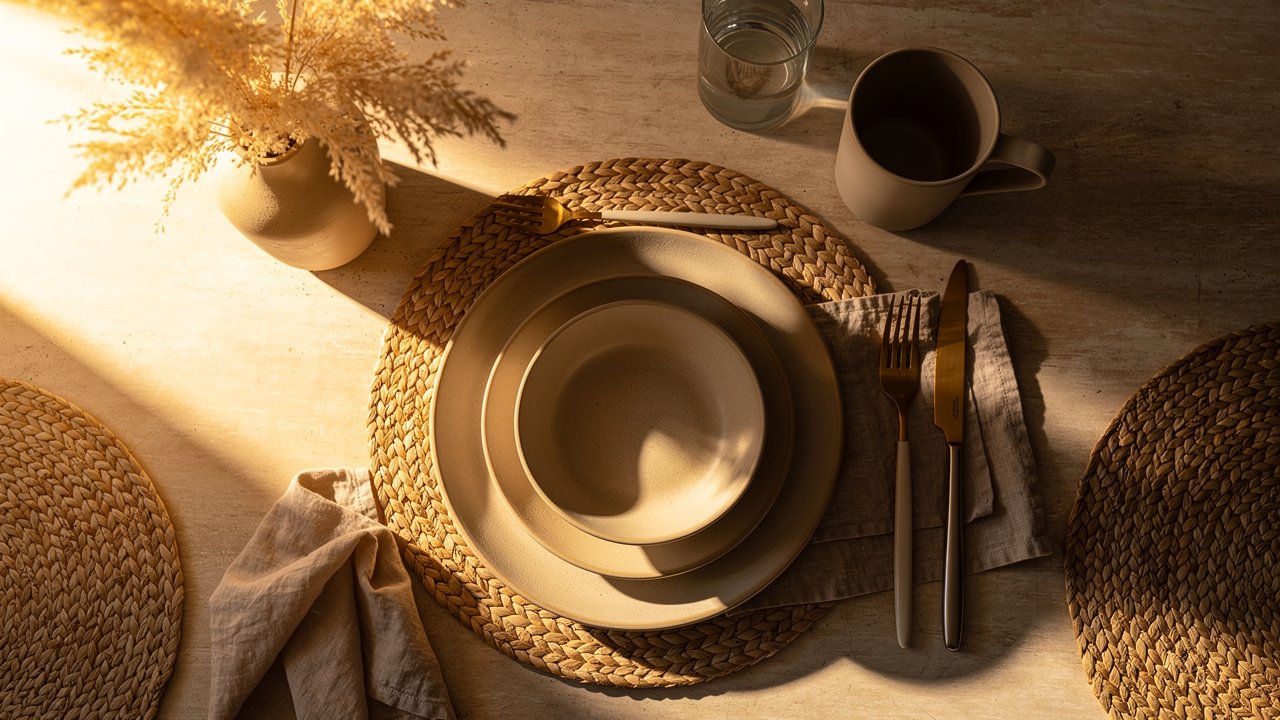
Stop. Your dishes are literally on display every single day. Multiple times a day. When you set the table for breakfast, when you grab a mug for coffee, when you arrange a casual dinner with friends, your dinnerware is doing the heavy lifting of your kitchen's visual story. It's not background decoration—it's the foreground. It's the thing your guests see up close. It's the thing your eye lands on when you open a cabinet or load the dishwasher.
Yet somehow, we've convinced ourselves that wall color matters more. That one accent wall that gets painted every three years while your everyday dishes remain the same forgettable cream-colored ceramic set you picked up in 2015.
"Your dinnerware isn't a utility—it's a design decision. Treat it like one."
I'm here to tell you that this backwards. Dinnerware is a design layer that deserves real consideration. Not because you need to spend a fortune, but because the aesthetic impact-to-effort ratio is genuinely unbeatable. You can completely transform how your kitchen feels by investing thoughtfully in a set that actually aligns with your style.
Think about it: a gallon of paint costs $30-50 and takes an afternoon. A quality dinnerware set costs $50-150 and lasts for years, getting used hundreds of times more frequently than you'll see that accent wall. And unlike paint, your dishes are something you physically interact with. You hold them. You eat from them. They're part of your sensory experience of your own home.
The fact that we've overlooked dinnerware as a serious design element is a design crime. It's time to fix that.
Three Dinnerware Personalities and What They Say About Your Kitchen's Style
Dinnerware isn't just functional—it's expressive. The set you choose telegraphs something specific about how you see your kitchen and how you want to live in it. Let me break down three distinct dinnerware personalities and what each one communicates.
The Minimalist Modern Statement
Clean lines. Solid colors. No pattern, no fuss. This is the dinnerware of someone who believes that less is more, and who wants their kitchen to feel calm, purposeful, and slightly elevated.
Minimalist dinnerware works beautifully in contemporary kitchens with open shelving, stainless steel appliances, and plenty of negative space. But here's the secret most people don't realize: this style also works brilliantly in traditionally styled kitchens if you choose the right color. A set of solid white or soft gray plates in a modern shape can actually create an elegant contrast against vintage tile or wood cabinetry, making your space feel intentionally curated rather than haphazardly decorated.
The challenge with minimalist dinnerware is that it demands precision everywhere else. Your linens need to coordinate. Your table styling can't be cluttered. This style works only if you're willing to extend the philosophy throughout your dining space.
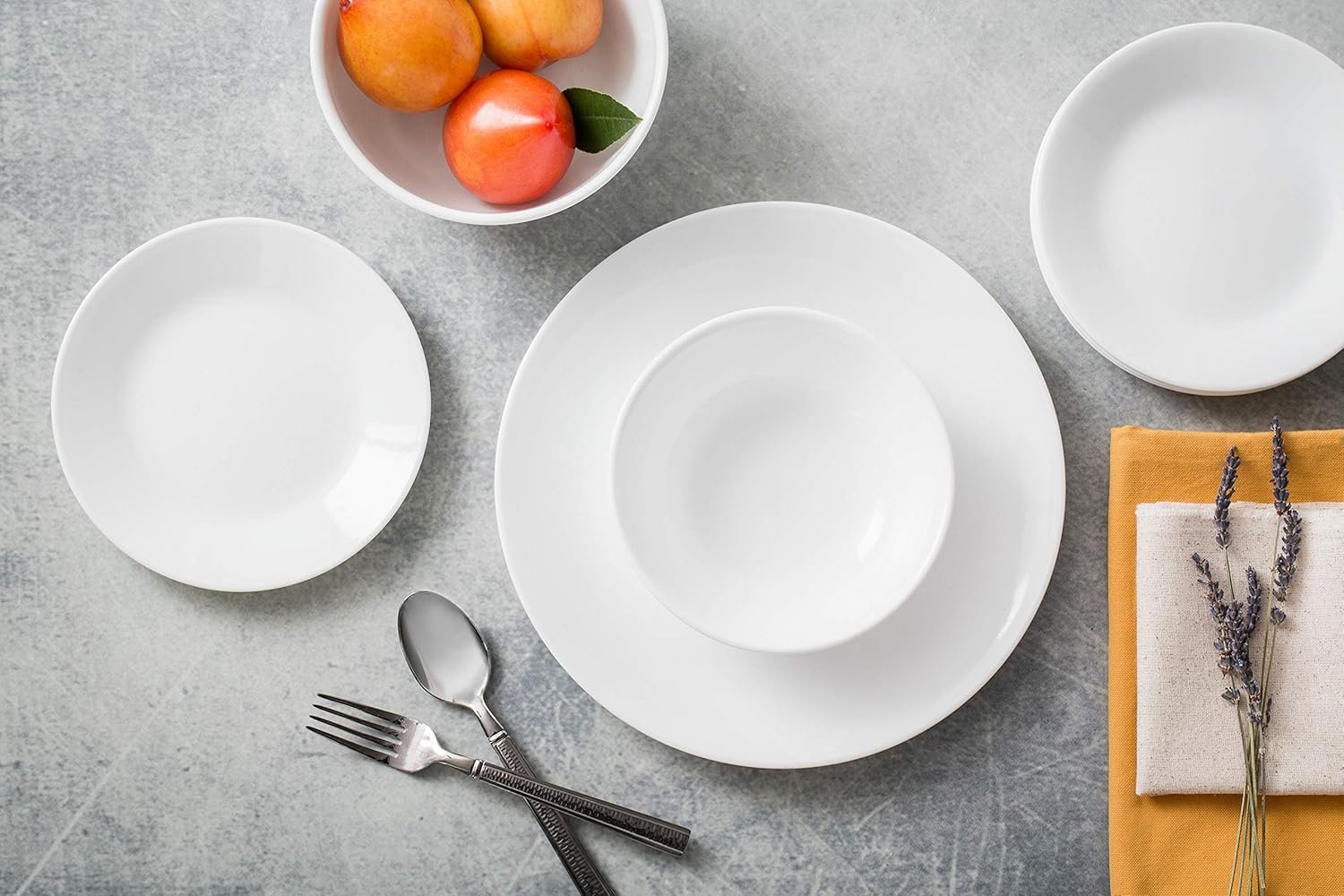
Corelle Vitrelle 18-Piece Service for 6 Dinnerware Set
$52.16
Triple-layer glass construction with a timeless white finish delivers clean minimalism without the fragility of traditional ceramic. Chip-resistant and lightweight, this set is modern design meeting everyday practicality.
See Today’s Price →The Sophisticated Bohemian
This is where personality lives. Pattern, texture, hand-painted details, maybe a mix-and-match approach with intention. Sophisticated bohemian dinnerware says: "I know myself well enough to break the rules deliberately."
These sets typically feature earth tones, botanical prints, or artisanal finishes. They work in kitchens with natural materials—wood, stone, open shelving—and they pair beautifully with textured linens and vintage accessories. The key word here is sophisticated. This isn't random or chaotic. It's thoughtful eclectic, which is very different.
Bohemian dinnerware gives you permission to be expressive, but it also commits you to a certain aesthetic direction. You can't pair boho plates with ultra-modern Everything else without creating visual confusion. This style works best when you lean into layering and texture throughout your entire space.
The Classic Traditional
Timeless patterns, rich colors, a sense of heritage and formality. This dinnerware whispers of Sunday dinners and carefully maintained homes. It's the choice of someone who values tradition and knows that some things don't need to trend.
Classic traditional dinnerware—think subtle floral borders, geometric patterns, or rich jewel tones—works equally well in formal dining rooms and casual farmhouse kitchens. The difference is in how you style around it. Pair traditional plates with vintage linens and antique glassware, and you're in a formal dining story. Pair the same plates with linen napkins and a simple wooden table, and suddenly you're in farmhouse territory.
This personality is the most versatile because it doesn't shout for any particular surrounding. It simply requires that you treat it with respect.
Enjoying this article?
Get curated picks in your inbox every Sunday.
How to Choose a Set That Works With—Not Against—Your Existing Kitchen Design
Now let's talk about the actual choosing, because this is where people get stuck. You walk into a store or scroll online and see 500 options, and without a framework, you end up picking based on "I like it" rather than "This works for my life."
Start With Your Architecture, Not Your Preference
I know this sounds rigid, but trust me: your kitchen's bones matter more than your personal taste when it comes to dinnerware. If you have warm wood cabinetry, cool-toned gray or white plates are going to create visual tension every time you open a cabinet. Conversely, if your kitchen is all white, glass, and chrome, and you choose a busy patterned set, your space starts to feel chaotic.
Walk around your kitchen and document its actual palette. Are your cabinets warm or cool-toned? What color is your backsplash? What finish are your hardware and appliances? Write this down. This is your dinnerware color foundation.
If your kitchen is warm-toned, you want dinnerware that has warm undertones—creams, warm whites, soft terracotta, muted ochre. If your kitchen is cool-toned, go for cool whites, soft grays, or cool blues. If you have a strong secondary color (like a teal backsplash), you can echo that in your dinnerware pattern, but do it subtly.
Assess Your Lifestyle, Not Just Your Aspirations
Be honest about how you actually eat. Do you entertain formally six times a year, or do you live in your kitchen with kids, dogs, and a propensity toward spontaneous gatherings? This matters enormously for the type of dinnerware you should choose.
If you entertain formally, you have license to invest in a more delicate set that spends most of its time in the cabinet. If you live casual, you need dinnerware that can take a beating—something chip-resistant, dishwasher-safe in the hottest cycle, and forgiving of imperfection.
Also think about your actual table-setting habits. Do you use placemats? A tablecloth? Do your plates show every fingerprint? If your answer to any of these is "I don't know," you might want to choose a set with slight texture or a subtle finish that forgives imperfection. Solid gloss finishes, while beautiful, require more maintenance to look perfect.
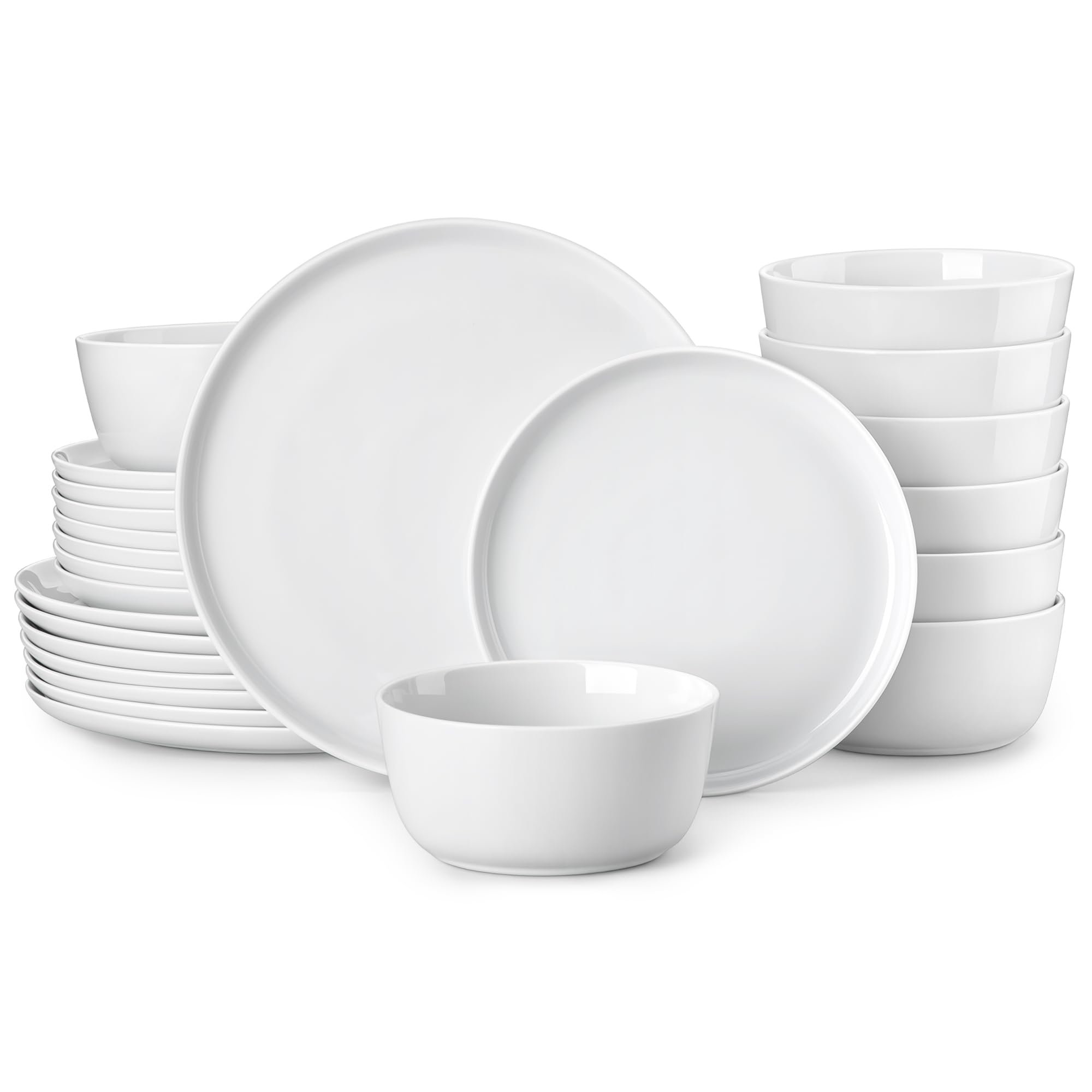
MALACASA 24 Pieces Gourmet Porcelain Dinnerware Set
$89.67
High-fired ceramic dinnerware for eight that balances sophistication with durability. The substantial weight and premium finish elevate everyday meals while holding up to regular use—ideal for those who entertain casually but want their table to feel special.
See Today’s Price →Consider the Shape and Rim
This detail is overlooked constantly, and it matters. The shape of your plate—whether it has a defined rim or flows into a flat center, whether it has a lip—changes how your food looks on it and how it photographs. It also affects how it coordinates with other dinnerware.
Plates with a defined rim work beautifully for formal settings and make plated food look intentional. Flat, rimless plates are more contemporary and versatile. Plates with a slight lip are practical if you're serving sauce-based meals because the food stays contained.
Think about what you actually serve most often. If you're a soup-and-stew person, you need a rim or a bowl that catches liquid. If you're doing composed salads and carefully plated dinners, a flat plate makes sense. There's no "right" answer—only the answer that's right for your actual life.
The Styling Secret: Layering Your Dinnerware Into Your Whole Dining Aesthetic
Choosing beautiful dinnerware is only half the battle. The real magic happens when you integrate it into a cohesive dining aesthetic. This is where most people stumble because they think of dinnerware as separate from the rest of their table design.
"Dinnerware isn't something you choose once and forget. It's an anchor piece that everything else in your dining space organizes around."
Build Your Table Narrative
Once you've chosen your dinnerware set, let it inform every other choice you make for your dining space. If you've chosen a sophisticated bohemian set with earth tones and subtle pattern, your tablecloth or runner should echo those tones. Your napkins should complement the texture. Your glassware should be thoughtful—maybe vintage-inspired rather than ultra-modern.
This doesn't mean matchy-matchy. It means intentional. Your vase, your candles, your charger plates—they're all having a conversation with your dinnerware. When that conversation is coherent, your whole space suddenly feels designed rather than decorated.
Extend the Palette Into Your Kitchen Itself
If your dinnerware is displayed on open shelving or visible through cabinet glass, it's actively part of your kitchen's permanent aesthetic. This means you should consider repeating its colors and tones in other places: your kitchen runner, your tea towels, even the plants you keep on the counter.
You don't need to match exactly. A kitchen with soft gray dinnerware, a warm beige runner, and white tile backsplash creates a cohesive palette because the tones are in conversation. That same kitchen with hot pink kitchen accessories would feel jarring because the gray dinnerware and pink are fighting for attention.
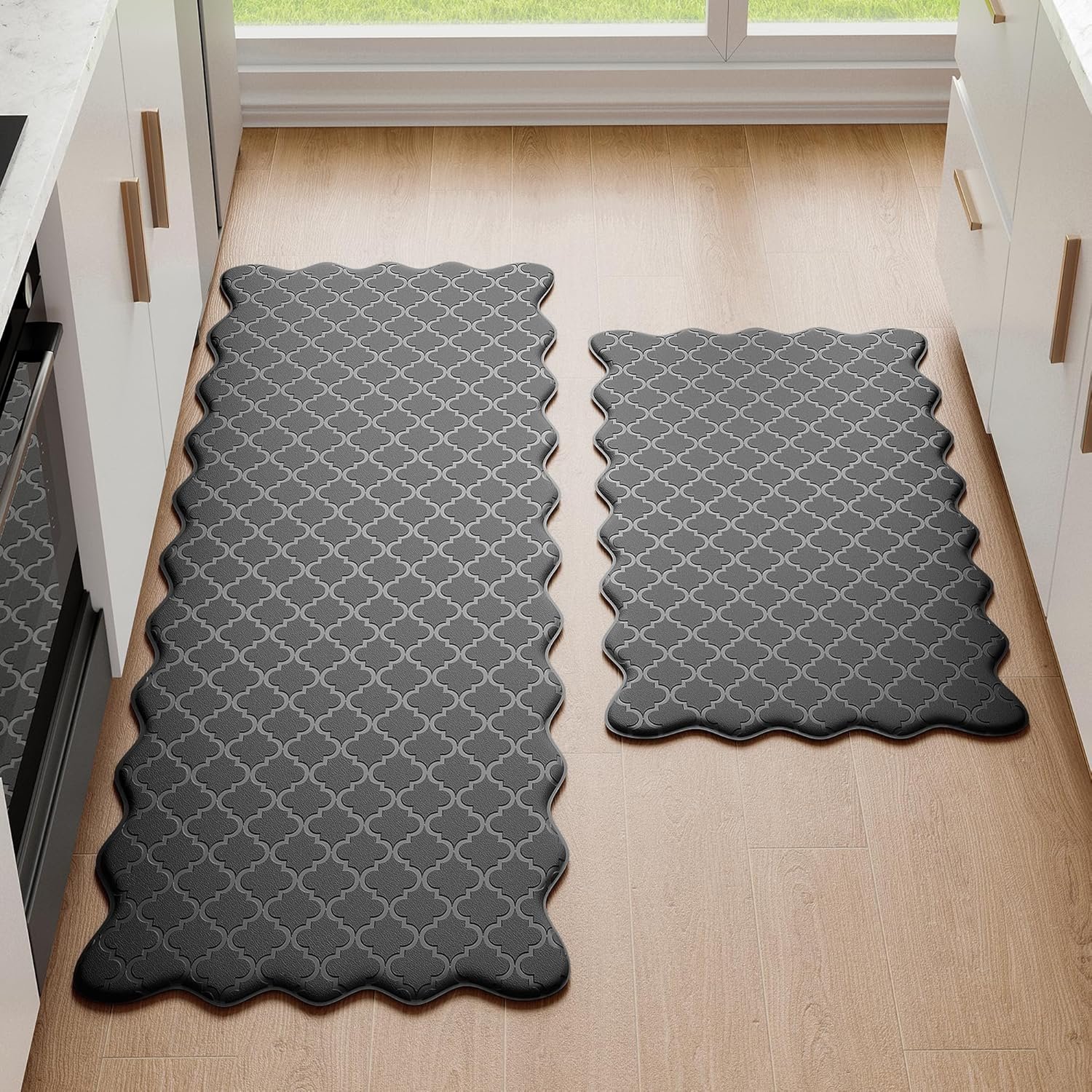
Upgrade Scalloped Embossed Kitchen Mats for Floor 2PCS
$21.56
Cushioned, non-slip kitchen mats that anchor your dining aesthetic from the ground up. The subtle embossing and scalloped edge add texture and sophistication to coordinate with dinnerware that has visual interest, while waterproof foam means they work in real, messy kitchens.
See Today’s Price →Style Your Shelves With Intention
If you have open shelving or glass-front cabinets, your dinnerware is always on display. This isn't a bug—it's a feature. But it means you need to treat shelf styling as seriously as you'd treat a bookshelf or living room console.
Stack plates by size. Add a few small decorative objects—a vase, a figurine, a small plant—that echoes the colors or mood of your dinnerware. Vary the heights and textures. The goal is that when someone looks at your open shelves, they see a curated collection, not a storage system.
This is also where serving pieces matter. A beautiful serving bowl that coordinates with your dinnerware, or a simple ceramic vase in a complementary color, adds dimension and personality to your shelf display.
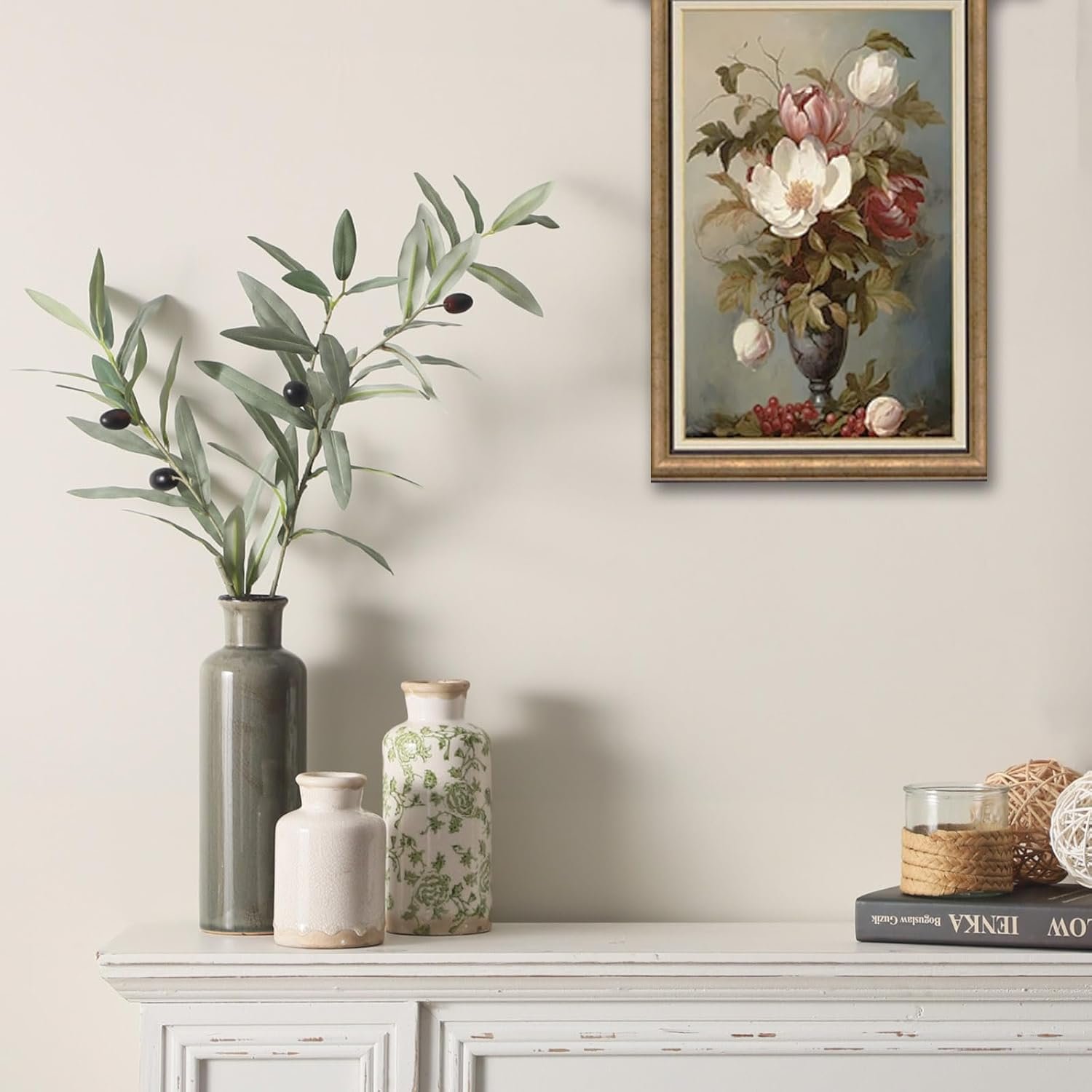
Vintage Vase Set of 3, Ceramic Vintage Flower Vases
$27.59
Ceramic vases with Chinoiserie details that add visual interest to open shelving. In soft, warm tones that complement most dinnerware palettes, these pieces bridge the gap between functional storage and decorative styling, perfect for displaying fresh flowers or adding height variation to your shelf arrangement.
See Today’s Price →Real Budgets, Real Choices: Investment Pieces vs. Everyday Sets (And When Each Wins)
Let's talk about the money question, because it's real and it matters. Dinnerware spans a wild price range, from $20 for a complete set to $300+ for high-end designer pieces. How do you know what's worth spending on?
When to Invest in Premium Dinnerware
You should invest in a higher-end set if:
- You entertain formally but occasionally. A beautiful, more delicate set that spends most of its time in the cabinet stays beautiful longer and justifies its cost because it's not getting daily wear.
- You have very specific aesthetic requirements. Premium brands offer designs that mass-market manufacturers simply don't make. If you have a particular vision, sometimes you need to invest to find it.
- You love the dishes themselves. If you get genuine pleasure from holding them, eating from them, and seeing them on your table, that emotional satisfaction just