The Real Cost of Distraction: Why Your Home Office Layout Matters More Than Aesthetics
Let's be honest: most home office advice gets it backwards. The design industry sells you a narrative about creating a "beautiful" workspace—as if aesthetics alone will unlock productivity. You're shown Instagram-perfect desks with matching accessories, statement lighting, and perfectly curated shelving. But here's what nobody tells you: a gorgeous office is worthless if you can't focus in it.
The real problem with most home offices isn't that they lack style. It's that they lack boundaries. Your brain doesn't care about the thread count of your office chair or the shade of your accent wall. What it cares about is being able to distinguish between "work space" and "everything else." When those boundaries blur—when your desk is visible from your couch, when your laundry pile is within your peripheral vision, when notifications ping from your phone sitting next to your keyboard—your brain doesn't shift into focus mode. It stays in ambient-awareness mode, constantly monitoring threats, opportunities, and distractions.
The cost of this fractured attention isn't just lost time. It's cognitive load. Every distraction—even one you ignore—consumes mental energy. Research on attention shows that the mere presence of a distraction creates a "switching cost." Your brain has to actively suppress it. Suppress enough distractions throughout the day, and by 3 PM, you're mentally exhausted even though you've accomplished far less than you should have.
A productive home office isn't about design trends. It's about creating an environment where your brain can't help but focus.
This is why thoughtful layout and organization are more valuable than any piece of designer furniture. A strategically positioned desk, a clear sightline from distraction, and intentional visual boundaries will boost your productivity more than a thousand-dollar standing desk ever could. The good news? This doesn't require renovation or a massive budget. It requires intention and a willingness to prioritize focus over Instagram aesthetics.
Light Pollution vs. Task Lighting: Creating Visual Boundaries That Boost Focus
Most home offices fail at lighting because they treat it as an afterthought. You might have overhead lights and a window—case closed, right? Wrong. Overhead lighting creates ambient visual chaos. Your eyes don't know where to focus because everything is equally bright. Meanwhile, natural light from windows creates glare on screens, shadowy areas that draw your eye, and—worst of all—a constant visual reminder of the world outside. Yes, the world that contains your unmade bed, your unfolded laundry, and the neighbor's cat.
What you need instead is task lighting with visual containment. Task lighting directs light exactly where you need it—on your desk, your work surface, your keyboard. It creates a literal circle of focus. Your peripheral vision darkens. Your brain stops scanning for threats or opportunities. It can only see the task at hand.
This is where a focused task light becomes non-negotiable. But here's the secret: you need to pair it with something that creates a visual barrier between you and the rest of your home.
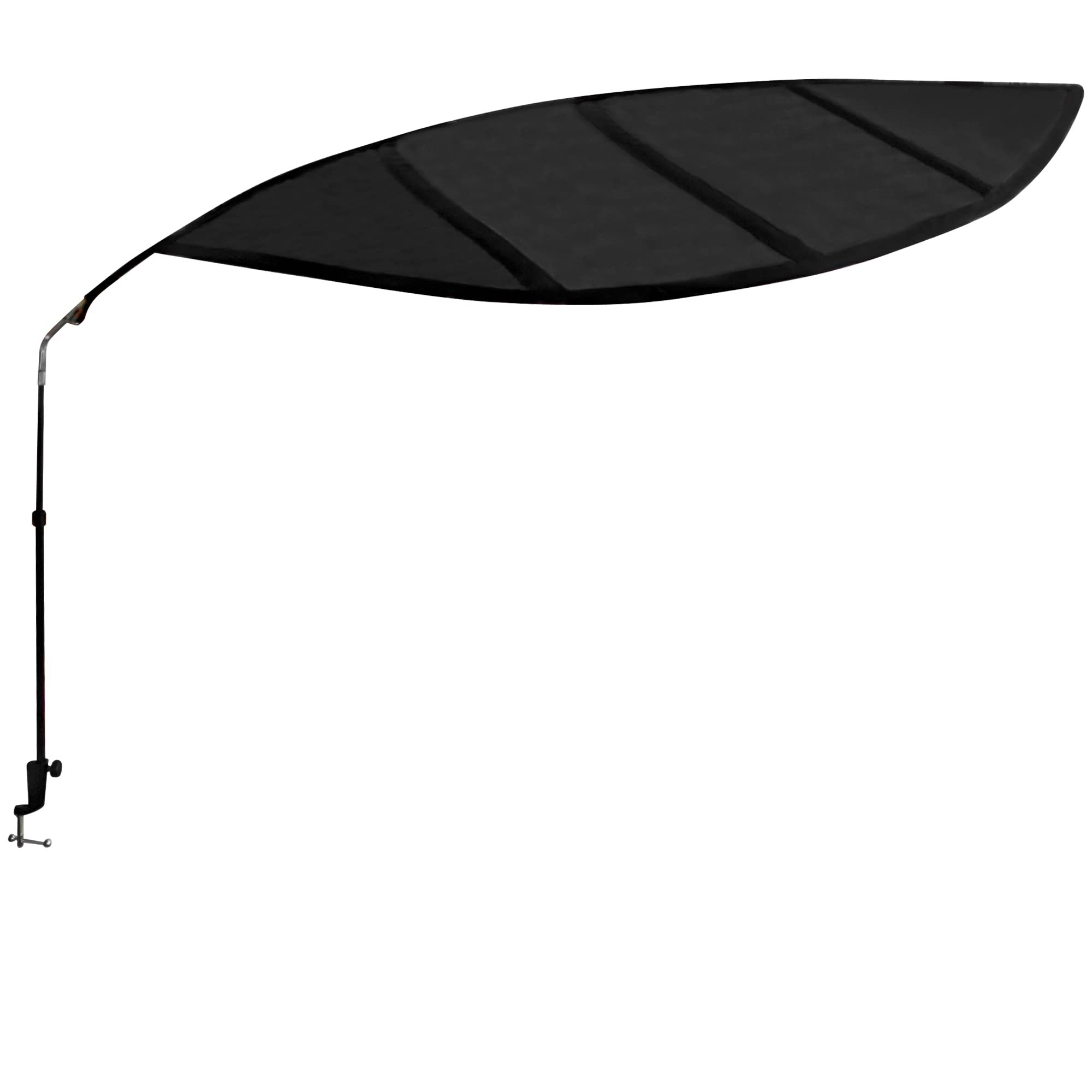
Office Cubicle and Desk Shade
$46.99
This simple privacy screen does double duty: it blocks your peripheral vision from seeing the rest of your home while creating a defined workspace. When combined with focused task lighting, it creates a psychological "office" that your brain recognizes instantly.
See Today's Price →The reason this works has everything to do with attention. Your visual field contains roughly 180 degrees of information at any moment. In a traditional room, that field is full of stimuli: the couch, the bookshelf, the window, the doorway. Even if you're not consciously looking at these things, your brain is processing them as potential sources of interest or distraction. A visual barrier reduces that field to maybe 60 degrees—just you, your desk, and your work. Your brain stops dividing its attention and locks in.
Pair this with a focused desk lamp (not an overhead light, and definitely not the blue-light disaster of an unshaded screen), and you've created what designers call "visual isolation." You're still in your home, but your eyes—and therefore your brain—are in work mode. This is worth far more than expensive furniture.
Enjoying this article?
Get curated picks in your inbox every Sunday.
Strategic Clutter Control: Why Clear Surfaces Aren't Enough—You Need Systems
Here's where most productivity advice falls apart. Everyone tells you to "minimize clutter" and "keep your desk clean." But they never explain what happens when it's 2 PM and you need your sales report, and you have no idea if it's in that stack of papers by your monitor, on your shelf, or somewhere in your documents folder.
A clean desk with no system is just a clean desk waiting to become a cluttered one. What you need is invisible organization—systems that keep things clear to the eye while actually functioning.
The difference is this: clutter isn't about the number of items on your desk. It's about items that don't have a designated home. A mug has a home—the kitchen. Your phone charger has a home—plugged into the wall. Your work papers need a home, too. But here's the problem: most desk organizers are ugly, bulky, or both. They turn your desk into a filing cabinet, which defeats the purpose of having a clean visual field.
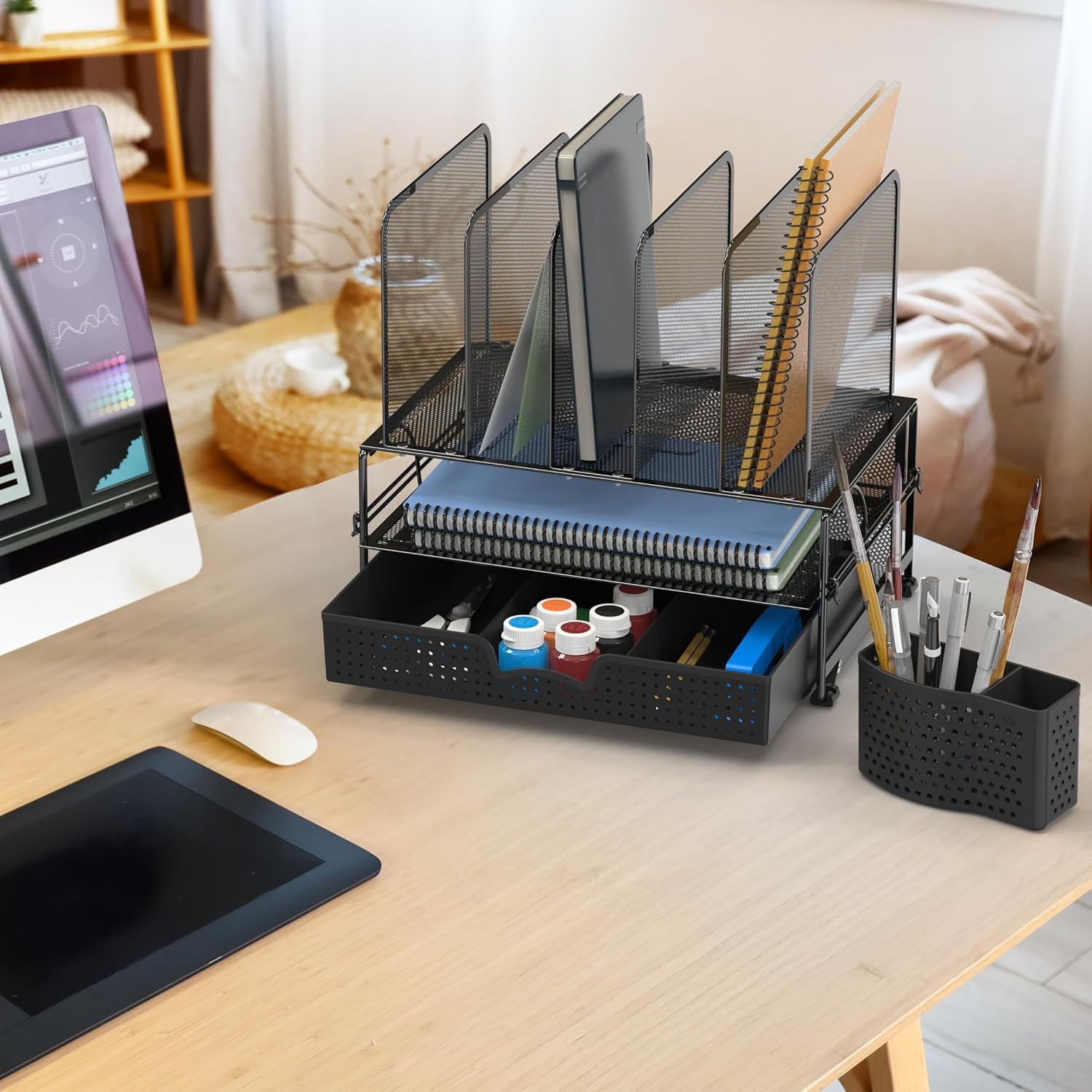
Simple Houseware Mesh Desk Organizer
$25.87
The genius of this organizer is its restraint. It doesn't call attention to itself. Five upright sections plus a drawer mean everything has a place without creating visual noise. Pens go in one section, current projects in another, reference materials elsewhere.
See Today's Price →The mesh design matters here too. It's visually lightweight compared to solid materials. Your eye can see through it, so it doesn't feel like a barrier even though it's doing important organizational work. This is the principle of functional minimalism: every object serves a purpose, and nothing is decorative. Your desk becomes a tool, not a showroom.
The key is to have a system before you buy the organizer. Ask yourself: What categories of items live on my desk? (Usually: writing tools, current projects, reference materials, and personal items.) Then get organizational tools that match those categories. If you buy a fancy organizer and try to retrofit your workflow to it, you'll lose focus constantly while hunting for things.
The Underestimated Power of Purposeful Accessories: Why a Desk Needs an 'Anchor'
This is where most productivity writing goes silent, because it sounds contradictory. You need a focused office, so shouldn't you remove all accessories? Absolutely not. Here's why: a completely bare desk is a depressing desk, and depression kills focus.
Your home office needs an anchor—a single, intentional piece that isn't functional but is deeply calming. It's the difference between a workspace that feels like a penalty box and one that feels like your space.
An anchor piece should be:
- Visually interesting without being distracting — Something you can glance at without getting pulled into rabbit holes
- Meaningful to you — Not a trendy accessory, but something that genuinely resonates
- Minimal maintenance — You shouldn't be fussing with it during work hours
- Tactile or olfactory — Engaging one of your other senses beyond sight creates a richer sense of place
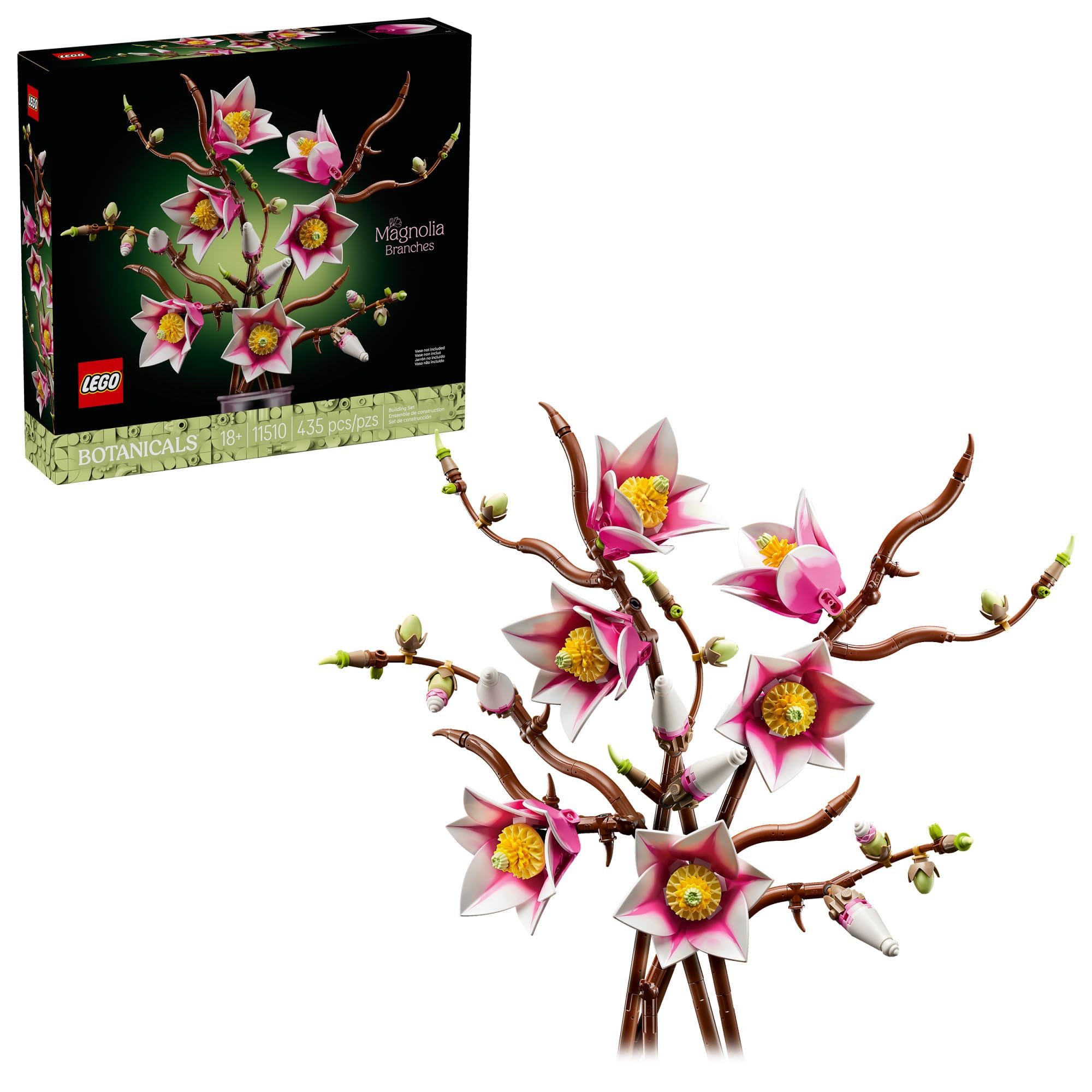
LEGO Botanicals Magnolia Branches
$49.95
An unexpected choice for productivity, but hear us out: this set creates natural beauty without requiring watering, wilting, or guilt. The sculptural quality is calming without being stimulating. It anchors a desk corner without demanding attention.
See Today's Price →Why does an anchor work? Because your brain needs beauty and calm, but it doesn't need novelty. A potted plant requires attention. A rotating collection of desk toys creates visual distraction. A single, beautiful, stable piece—something like an architectural plant, a meaningful sculpture, or a carefully chosen object—provides visual rest. Your eye lands on it, finds it pleasant, and moves back to work. That's the entire transaction.
The LEGO botanicals are particularly brilliant for this because they combine multiple subtle pleasures. They're green (calming), they're sculptural (interesting to glance at), and they require zero maintenance (zero guilt). They create a sense of "nature" without any of the anxiety that comes with keeping a real plant alive while you're stressed about deadlines.
Building Your Focus-First Home Office: A Framework, Not a Checklist
Now let's talk about bringing this together in a way that actually works. This isn't about following a checklist. It's about understanding the principles and applying them to your specific space and situation.
Step 1: Establish Your Visual Boundary
Before you buy anything, look at your desk. Can you see your bedroom from it? Your couch? The kitchen? If yes, you need a visual barrier. A desk shade, a bookshelf positioned strategically, a curtain—something that narrows your field of vision. This is non-negotiable. Productivity can't happen when you're in a state of ambient awareness.
Step 2: Install Task Lighting That Supports Your Barrier
Once you have your visual boundary, add focused light to your immediate work area. This light should come from above and to the side, not from behind you or directly overhead. The goal is to create a "lit circle" where you work and a subtle dimness everywhere else. This tells your brain: focus happens here.
Step 3: Create Homes for Everything
Before you even touch an organizer, list every category of item that lives on your desk. Then get a single, well-designed organizational tool that accommodates those categories. The goal is a clean surface where every item visible is something you're actively using or something that anchors your space.
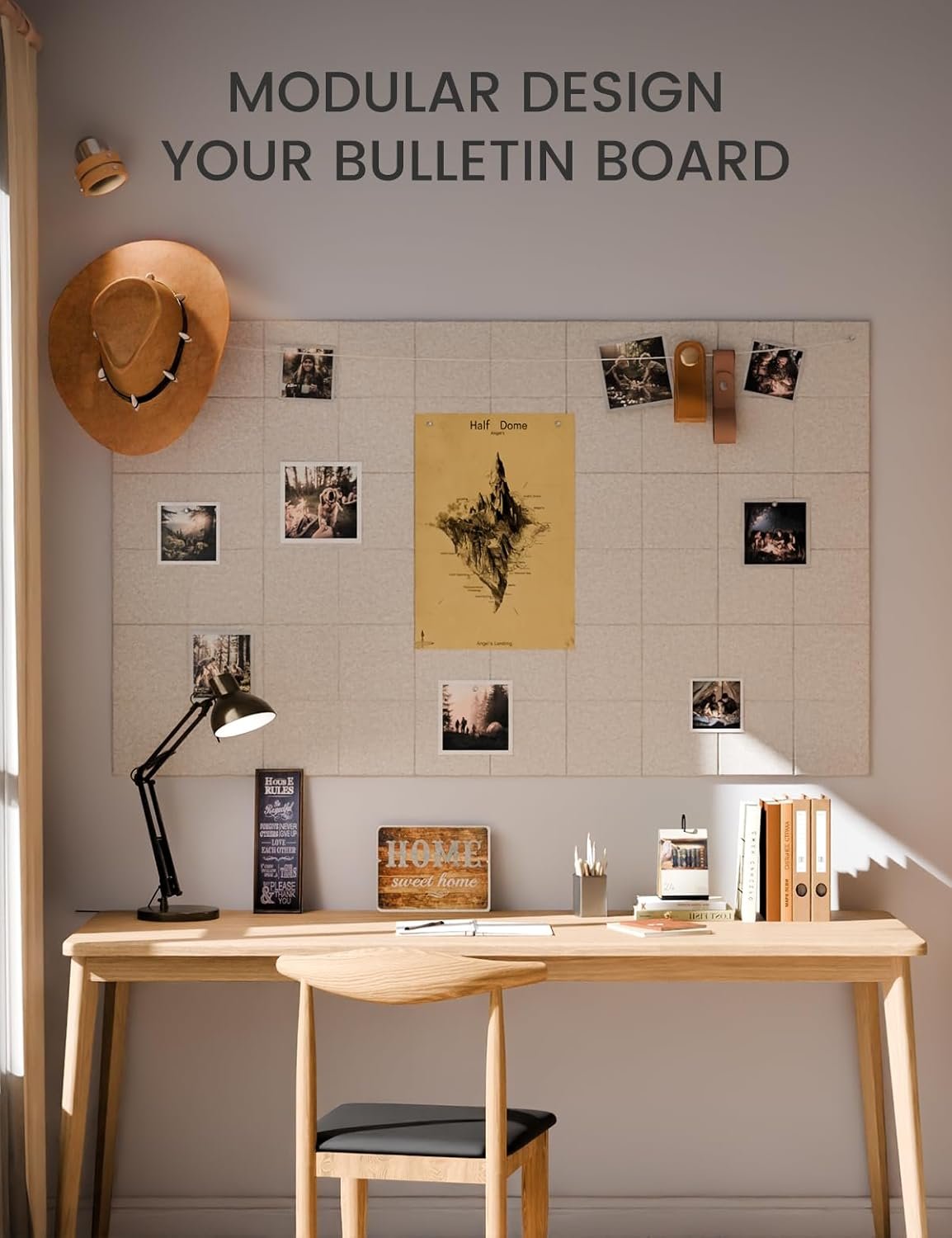
Large Felt Bulletin Board 36"x24", 6-Pack Wall Organizer
$24.99
If you work with papers, references, or visual reminders, this modular felt system is superior to cork or dry-erase. It's soft (calming), customizable (you only mount what you need), and the adhesive tabs mean nothing is permanent. Your focus space can evolve.
See Today's Price →Step 4: Add Sensory Anchoring (Without Distraction)
Now add one intentional piece—your anchor. This might be the plant, a small sculpture, a framed photo, or even a pleasant-smelling object. The key is one. Not five things that need your attention. One thing that makes you feel grounded.
Step 5: Consider Subtle Olfactory Support
Here's something most productivity writing ignores: smell is deeply connected to focus and mood. Not aggressive scents—not a plug-in diffuser pumping synthetic lavender. Something subtle. A candle warmer is brilliant for this because it's completely optional (you can turn it off), it provides soft ambient scent, and it adds a tiny bit of warmth to your space.
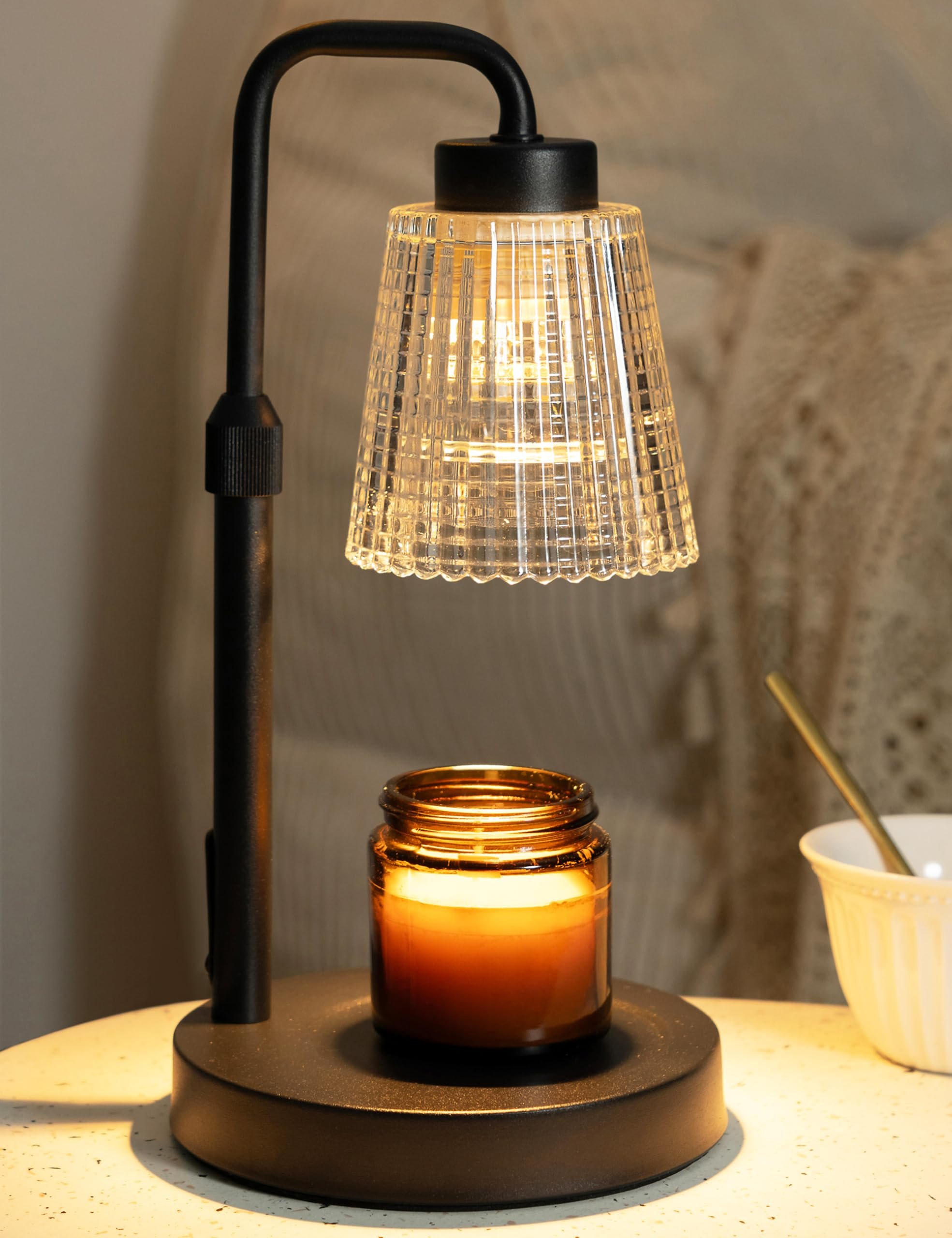
Candle Warmer Lamp with Timer Dimmable
$19.99
A candle warmer is the sophisticated alternative to burning a candle. No flame, no smoke, just gentle heat that releases scent throughout your work session. The timer and dimmer mean you control the intensity—perfect for creating atmosphere without distraction.
See Today's Price →Set it to a 2-3 hour timer. The scent becomes part of the ritual of "work mode" without becoming something you notice or think about. Your brain simply associates that subtle fragrance with focus.
Step 6: Test and Adjust
Here's the crucial part that nobody mentions: your first attempt won't be perfect. You'll set everything up, work for a few days, and realize something isn't quite right. Maybe the barrier blocks too much light. Maybe the organizer isn't quite the right size. Maybe you need a different anchor piece. This is fine. Adjust it. Your focus space should evolve based on what actually works for your brain, not what looks good in theory.
The goal isn't a perfect office. The goal is an office where you can't help but focus.
Conclusion: Focus Isn't Decorative
Let's return to where we started. Your home office isn't a design project. It's an attention management project. Every choice you make—where you sit, what you can see, how things are organized, what anchors your mood—is either supporting your focus or undermining it.
The beautiful irony is that an office designed for focus ends up being more beautiful than one designed for aesthetics. It's peaceful. It's intentional. It's yours in a way that a carefully styled Instagram set never can be.
You don't need to spend thousands of dollars or completely redesign your space. You need to think strategically about distraction, create clear visual and organizational boundaries, add just enough comfort to make your brain want to stay there, and then test what actually works. That's how you build a home office that doesn't just look