Why Designers Obsess Over Entryway Mirrors (It's Not About Vanity)
Your entryway mirror isn't a vanity station. It's a spatial statement—a design anchor that does three critical jobs at once: it expands perceived square footage, it bounces light deep into dark corridors, and it sets the emotional tone before anyone steps foot into your home. Interior designers obsess over entryway mirrors because they understand something most homeowners miss: the entryway mirror moment is where first impressions crystallize into lasting feelings.
When you walk into someone's home and immediately see yourself reflected in a well-placed mirror, something psychological happens. You feel seen. You feel the space is organized and intentional. A blank entryway wall feels abandoned. A thoughtfully styled entryway with a statement mirror reads as confident, curated, and welcoming. This isn't luxury—it's psychology.
"The entryway mirror isn't decoration. It's an architectural decision that changes how every single person experiences your home."
The spatial expansion benefit is equally real. A 36-inch mirror in a narrow entryway doesn't just reflect your face—it doubles the visual depth of the space. It creates an invisible wall that pushes the boundary of your foyer backward, making cramped entries feel generous. This is why even tiny apartments benefit from a substantial entryway mirror. Size matters. A 16-inch mirror won't do the work; a 36-inch mirror will transform the room.
Light multiplication is the third power. Most entryways suffer from borrowed light—a single overhead fixture or worse, just ambient hallway light. A mirror catches whatever light exists and bounces it around, creating layers of illumination that make the space feel alive. Pair this with intentional lighting (more on that in the next section), and your entryway becomes a glowing threshold rather than a dim passageway.
The Lighting Layer Entryways Need: How Picture Lights Amplify Mirror Impact
Here's the design secret that separates thoughtful entryways from forgettable ones: a mirror alone is incomplete. It needs dedicated lighting—not overhead fixture light, but purposeful accent light positioned to both illuminate the mirror frame and cast a subtle glow across the entryway wall.
A picture light mounted above the mirror frame (or sometimes on a wall beside it) serves dual purposes. First, it highlights the mirror's frame, drawing the eye upward and emphasizing the architectural weight of your statement piece. Second, it creates ambient illumination that softens the transition between entryway and living space. This is layering—the same principle we explore in our guide to layered textures, but applied to light rather than fabrics.
Battery-operated picture lights are game-changers for renters or anyone who wants flexibility. They require zero electrical work, mount with adhesive strips, and can be repositioned instantly. Look for lights with dimmable settings and adjustable brightness modes—these allow you to shift the mood of your entryway from energizing morning light to soft evening glow.
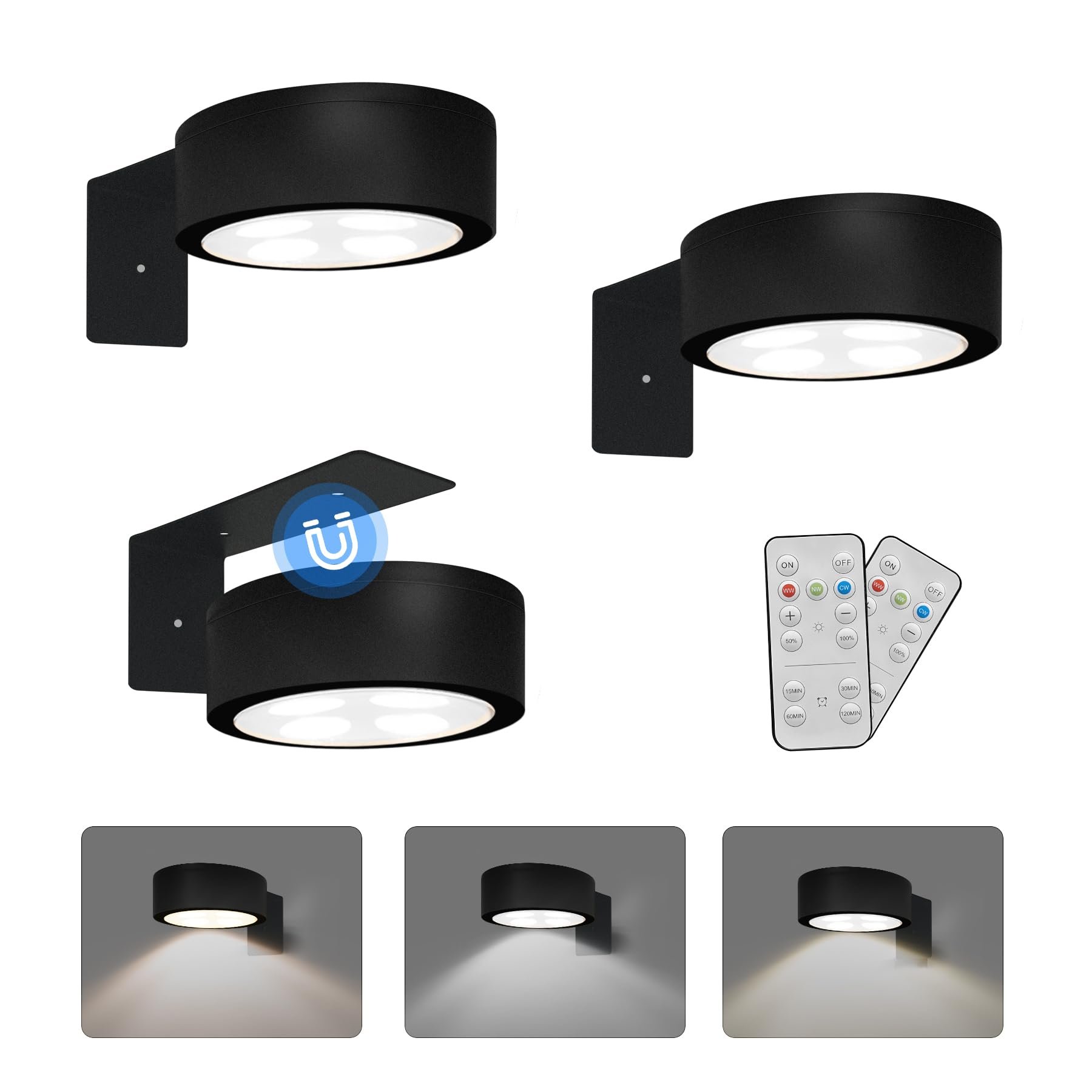
3-Pack Battery Operated Picture Light Magnetic Painting Light with 3 Lighting Modes, Remote and Dimmable Timer
$20.99
Three dimmable lights with remote control and timer function let you customize your mirror's accent lighting without any wiring. The magnetic mounting works on any metal surface, making repositioning effortless.
See Today’s Price →The warm color temperature matters more than you'd think. Cool white light (5000K+) makes entryways feel clinical and cold—think hospital hallway. Warm white (2700K-3000K) invites people in. It mimics candlelight and sunset, activating the parasympathetic nervous system and literally making guests feel calmer. This isn't marketing language; this is color psychology. Choose warm-toned picture lights for your mirror setup.
Placement is critical. Mount your picture light 12-18 inches above the top of the mirror frame, centered. This creates uplighting that flatters the mirror itself and casts a gentle wash across the wall. If your entryway is shallow and tight, wall-mounted side lights can work instead—positioned at roughly eye level on either side of the mirror frame. This flanking approach feels more gallery-like and works beautifully in modern or eclectic spaces.
Enjoying this article?
Get curated picks in your inbox every Sunday.
Mirror Size, Frame, and Placement: The Golden Rules
Let's talk specifics, because vague mirror advice ("just get something that feels right") is how you end up with a 24-inch frame looking sad on a 10-foot wall.
Size: Your entryway mirror should occupy roughly one-third to one-half of your vertical wall space. If your entryway ceiling is 9 feet, your mirror should be between 36 and 48 inches tall. If it's a standard 8-foot ceiling, go for 36 inches. In very small entryways (under 5 feet wide), a 30-36 inch mirror is still substantial without overwhelming the space. The goal is presence, not dominance.
Frame Selection: The frame communicates your home's design language before anyone even steps inside. A gold or brass frame says warmth, richness, and transitional style. Black frames feel modern and graphic. Natural wood frames ground bohemian or rustic schemes. Ornate gilt frames belong in traditional or maximalist homes. The frame you choose should echo your living room aesthetic—not match it exactly, but speak the same design dialect. This creates visual flow from threshold to interior.
When evaluating a classic gold-framed option, pay attention to the actual frame depth and finish quality. Shallow frames (1-1.5 inches deep) feel contemporary and light. Deep frames (2+ inches) feel more traditional and statement-making. A polished gold finish reflects light beautifully, while brushed gold feels more matte and sophisticated.
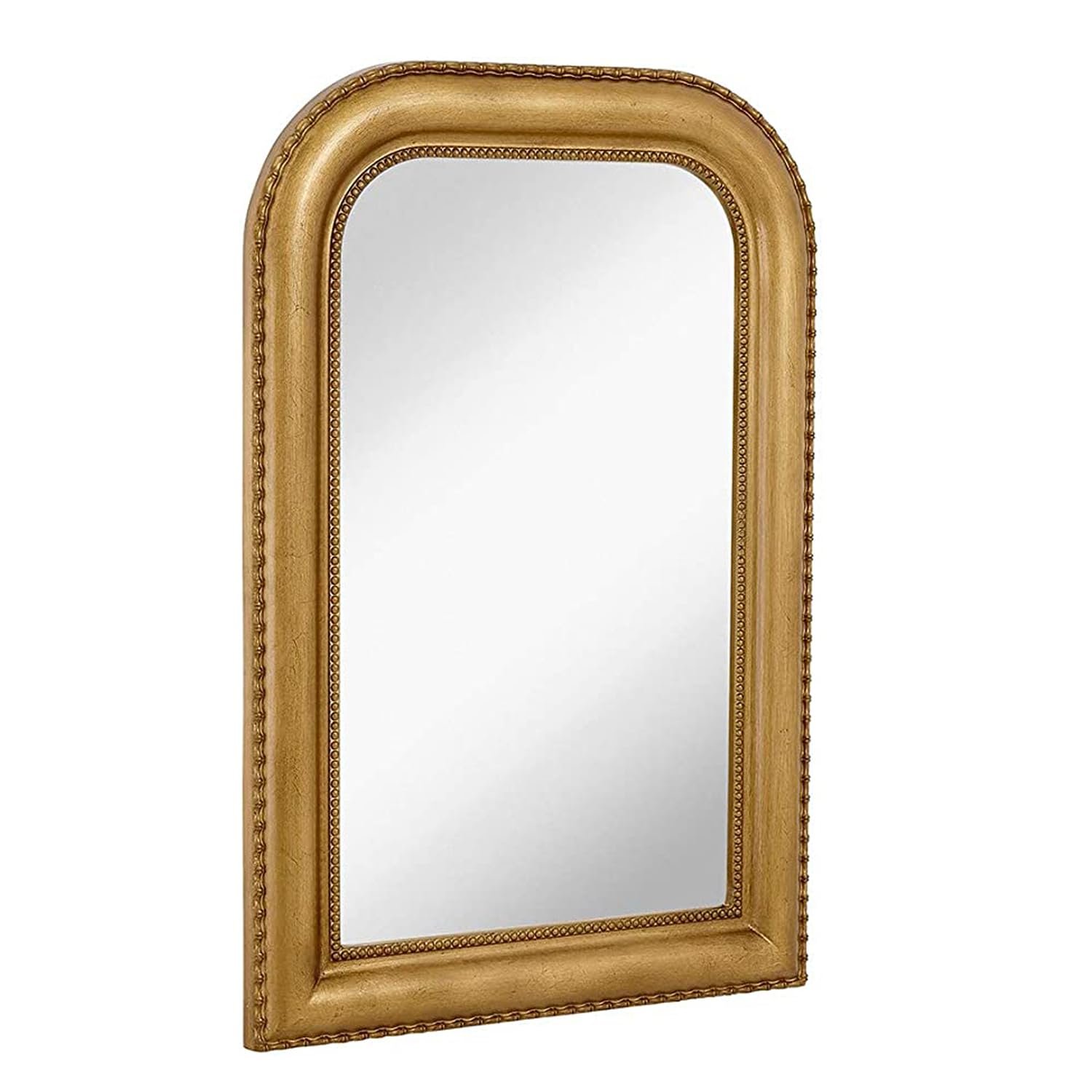
Hamilton Hills 36" x 24" Classic Gold Framed Polished Glass Top Round Corner Mirror
$219.99
This 36-inch polished-gold frame in a classic rectangular shape delivers the spatial expansion you need without trend-chasing. The round corners soften the geometry, making it feel welcoming rather than stark.
See Today’s Price →Placement: Your mirror should hang at eye level, with the center of the mirror at approximately 57-60 inches from the ground. This is standard gallery height and feels psychologically comfortable—you can see your full face without tilting. However, if your entryway has high ceilings and dramatic scale, you can float it slightly higher (62-66 inches) to emphasize verticality and make the space feel even taller.
Horizontally, center your mirror on the main wall of your entryway. If your entryway is a hallway, choose the wall opposite your entry door—the first wall guests see when entering. If it's a wider foyer, the wall behind a console table or the primary focal wall works best.
Styling Around Your Statement Mirror: Functional Decor That Welcomes
A mirror alone is a mirror. A mirror surrounded by intentional styling becomes an entryway moment.
The space directly beneath your mirror is real estate. A console table, narrow credenza, or floating shelf serves as the anchor. This is where you place a table lamp, a bowl for keys, a small vase of branches, and perhaps a decorative object that reflects your aesthetic. The rule: keep it curated, not cluttered. Three to five objects maximum. More feels chaotic; less feels empty.
To the sides of your mirror, consider wall-mounted organizers that feel purposeful, not utilitarian. A decorative key holder with hooks and shelving solves the classic entryway problem—where do coats, keys, and bags go?—while maintaining design coherence. Choose materials that echo your mirror frame or other entryway metals. If your mirror has gold hardware, a gold-accented key holder feels intentional. If you're going matte black or natural wood, match those tones.
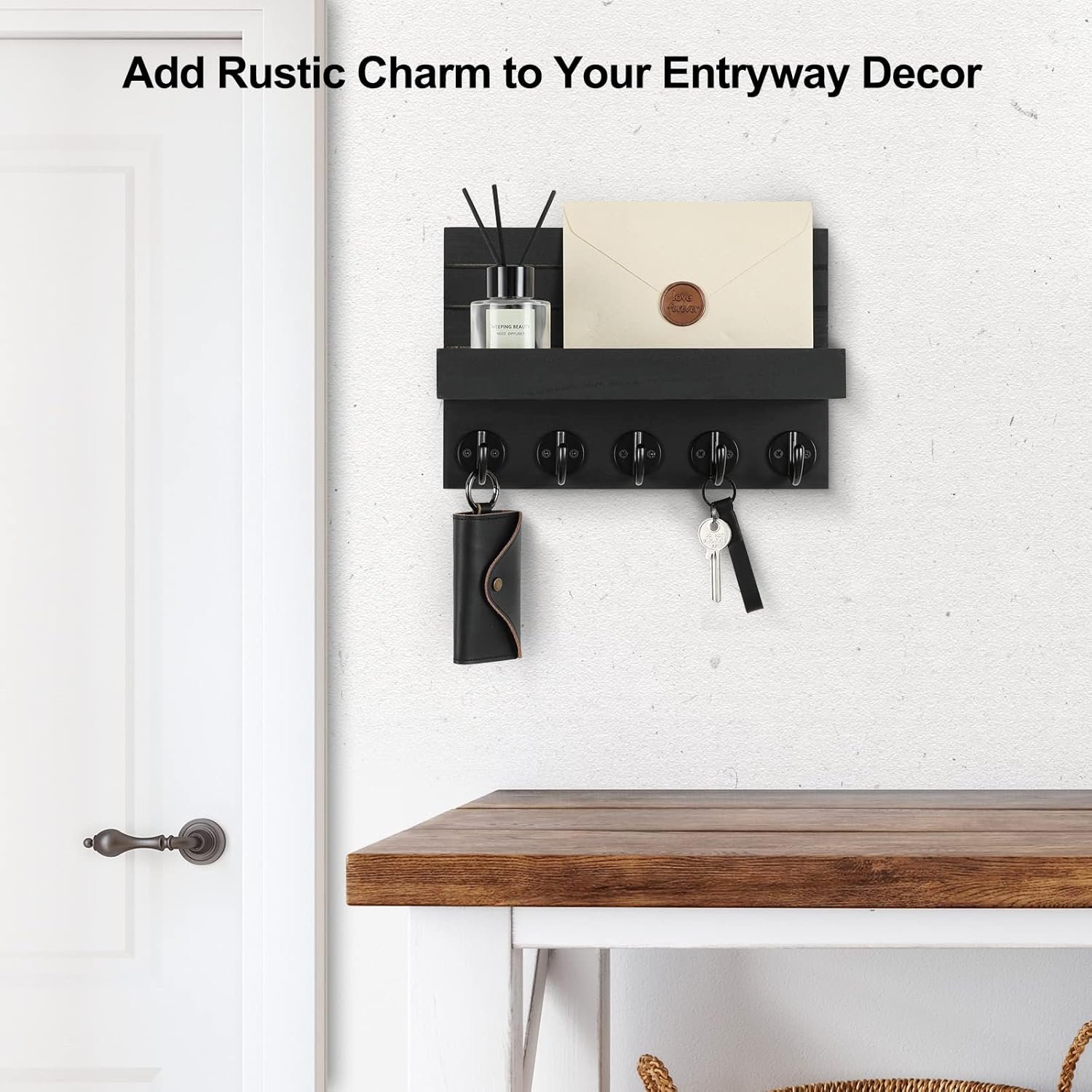
Lwenki Key Holder for Wall, Decorative Key and Mail Holder with Shelf Has Large Hooks for Bags, Coats, Umbrella
$12.99
This decorative key holder doubles as functional art—large hooks for coats and bags, shelf space for mail and daily essentials, and a design that doesn't scream "utility." It keeps your entryway organized and visually intentional.
See Today’s Price →Texture matters in small entryway spaces. A woven basket catches your eye and breaks up hard surfaces. A throw blanket draped over a chair (if space allows) adds warmth and softness. These aren't frivolous touches—textures activate the sensory experience of your home before anyone even walks into the living room.
Scent is the final layer. A subtle candle or a simple vase of fresh flowers engages the olfactory sense and signals care. Your entryway should smell like a home that's lived in intentionally, not a hotel lobby or, worse, nothing at all.
Real Entryways, Real Budgets: From $200 to $400+ Mirror Setups
Let's strip away the luxury fantasy and talk actual budgets. Your entryway mirror investment doesn't need to demolish your home decor fund.
The $200 Entryway: A 36-inch polished gold framed mirror ($120), a set of battery-operated picture lights ($25), and a small console table ($55) totals roughly $200. Add a decorative bowl and a small vase, and you've created an entryway that reads as intentional and designed. This is the bare-bones setup that still transforms a space.
The $300 Entryway: Upgrade to a premium framed mirror ($200-250), add professional-grade picture lighting ($40-60), include a higher-quality console table or credenza ($80-100), and layer in a decorative key holder and thoughtful accessories. You're now in white-glove territory without luxury pricing.
The $400+ Entryway: Here's where you invest in a statement piece—a large sculptural mirror ($300-400), premium lighting ($60-80), a quality console with storage ($150-200), and curated accessories that reflect your exact aesthetic. This is the entryway you'll never tire of.
The point: you don't need to spend $600 to create an entryway moment. You need intentionality. The most expensive mirror won't save a thoughtlessly styled space. A $200 mirror paired with good lighting and purposeful styling will outperform a $600 mirror in a dark corner with no context.
The Textured Landing: Why Throws and Key Holders Belong in Your Entryway
Texture transforms entryways from functional to inviting. Hard surfaces—tile, wood flooring, glass—dominate most entryways. Without texture interruption, these spaces feel cold and utilitarian. A soft throw blanket, a woven basket, or natural fiber elements warm up the sensory experience.
This connects to the broader design principle we've explored in our article on how layered textures transform spaces. The same logic applies here: entryways need visual and tactile variety. Smooth mirror glass needs to be counterbalanced by something soft. Sleek picture lights need organic shapes nearby.
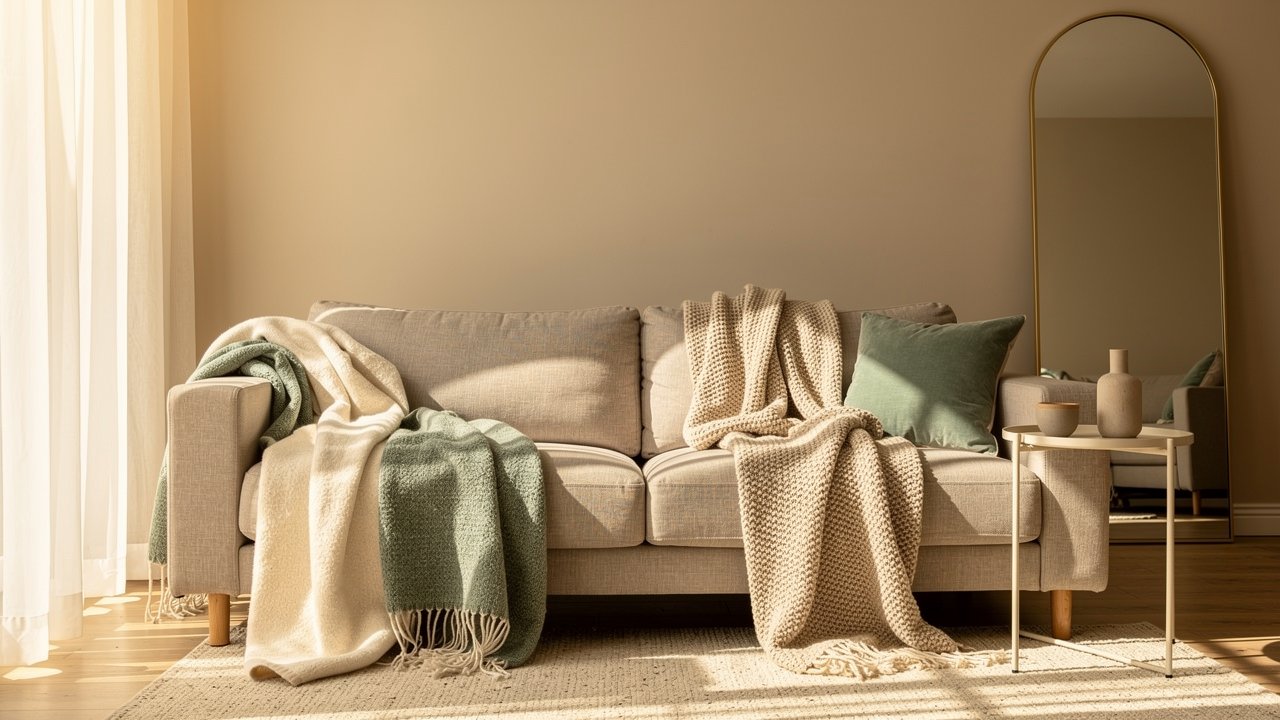
A high-quality throw blanket serves dual purpose in entryway styling. Draped over a chair or bench, it adds color, texture, and visual interest. It also signals that this home prioritizes comfort—guests see that blanket and immediately feel permission to relax. Choose blankets in natural fibers (cotton, linen, wool) or soft synthetics that invite touch.
Bedsure GentleSoft Fleece Throw XL Blanket Navy - 300GSM Soft Lightweight Plush Cozy Blankets
$21.59
This oversized fleece throw in navy adds softness to any entryway while remaining practical for guests who need a light layer. The 300GSM weight feels substantial without bulk, and the neutral color palette won't clash with any design scheme.
Get picks like these in your inbox.
Join our Sunday newsletter — curated finds matched to your style.