The Bathroom Storage Paradox: Why Organization Matters More Than Size
Let me be direct: you don't have a small bathroom problem. You have an organization problem.
I say this not to be harsh, but to be honest. I've visited bathrooms of every conceivable size, and I've noticed something remarkable. Some compact bathrooms feel spacious, calm, and intentional. Others—even moderately sized ones—feel cramped, chaotic, and anxiety-inducing. The difference almost never comes down to square footage.
The difference is systems.
In our culture of consumerism, we're conditioned to believe that more space is the answer. When the bathroom feels crowded, we think about renovations, expansions, or moving to a larger home. But here's what actually happens in most homes: we add square footage and proceed to fill it with the same clutter, the same disorganization, and the same lack of intentionality. The problem wasn't the bathroom. It was never the bathroom.
This article isn't about maximizing storage capacity. It's about something more valuable: creating a bathroom environment where everything has a place, where you can find what you need in seconds, and where the space itself makes you feel peaceful instead of stressed. That starts with understanding why organization matters so profoundly—and then building systems that actually work for your life.
The Hidden Cost of Clutter: Why Disorganized Bathrooms Feel Smaller Than They Are
When items are scattered across surfaces without logic, your eye has nowhere to rest. Every element competes for attention. A bottle here, a jar there, a stack of products on the counter, towels draped over the rack—your brain registers all of it simultaneously as visual noise. This isn't just aesthetically unpleasant. It literally makes the space feel smaller.
There's actual psychology behind this. Cognitive overload from visual clutter triggers mild stress. Your nervous system works harder to process chaotic environments. You move through the space less efficiently because you're constantly sidestepping things or looking for items. The physical bathroom may be the same size, but your experience of it is compressed.
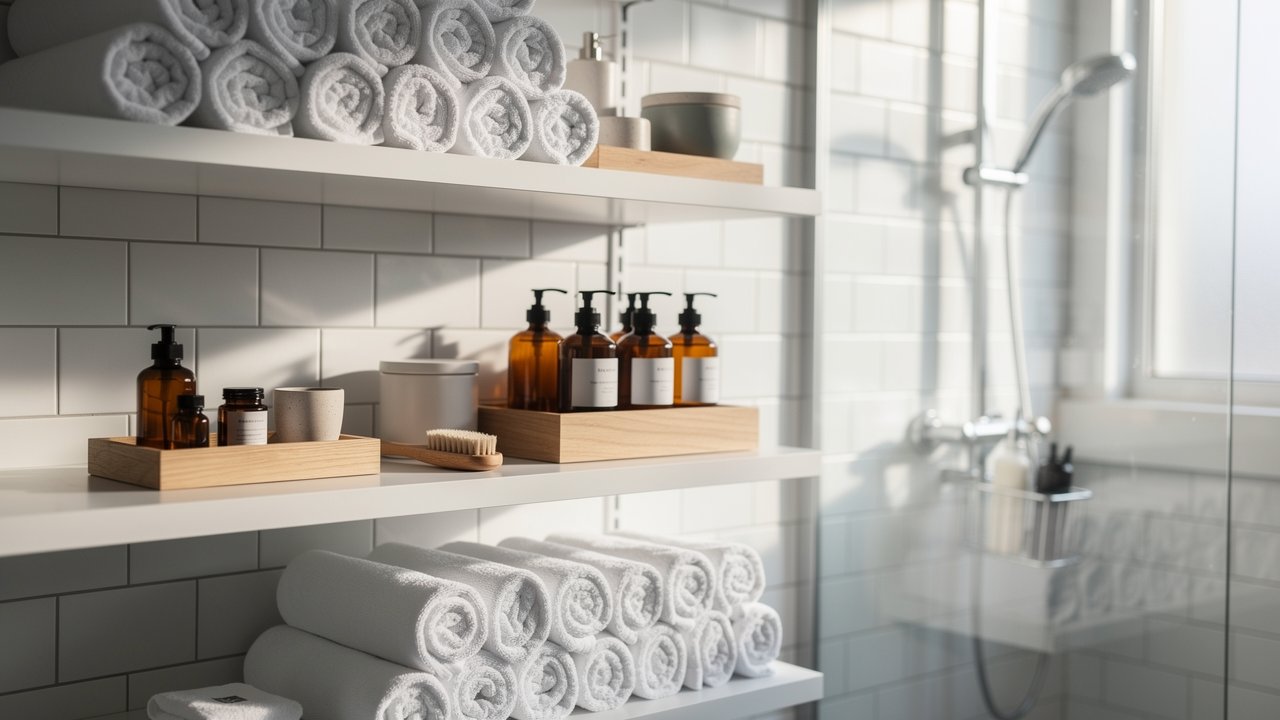
Now flip the scenario. Imagine stepping into a bathroom where every product has a designated home. Where surfaces are clear except for a few intentional items. Where you can locate your toothbrush, face wash, and deodorant in under five seconds without thinking. That's not a larger bathroom. It's a functional bathroom. And functionality creates the impression—and the reality—of spaciousness.
The second hidden cost of clutter is decision fatigue. Every time you reach for something, your brain has to locate it among dozens of options. Toothpaste under the sink or in the cabinet? Where did you put that sunscreen? This daily cognitive load accumulates. By the time you've finished your morning routine, you've made dozens of micro-decisions in a space that should be calm and automated.
"A cluttered bathroom isn't just unpleasant to look at—it's exhausting to use. Organization transforms the bathroom from a source of daily friction into a source of daily ease."
The third cost is one nobody talks about: the hidden expense of replacing items you already own. When products are disorganized, they become invisible. You can't see that half-empty bottle of lotion buried in the cabinet, so you buy another one. You forget about the deodorant you stashed in a drawer, so you purchase a replacement. Over time, poor organization is an expensive habit. Strategic storage systems eliminate waste by making your inventory visible and manageable.
Enjoying this article?
Get curated picks in your inbox every Sunday.
Storage Hierarchy: Rethinking What Should Be Visible vs. Hidden
Not everything in your bathroom deserves to be on display. But not everything should be hidden either. The key is understanding the storage hierarchy—a framework that determines what lives where based on frequency of use, aesthetic value, and mental load.
Daily-Use Items: Visible and Accessible
Items you use every single day should be visible and within arm's reach. Your toothbrush, toothpaste, face wash, and deodorant are non-negotiable daily essentials. These should be immediately accessible without opening cabinets or drawers. This isn't just about convenience. When daily essentials are visible, you see them being used regularly, which creates a sense of order and intentionality. You're acknowledging what matters to your routine.
Occasional-Use Items: Hidden But Accessible
Items you use weekly or monthly—extra towels, medications, first aid supplies, hair treatments—should be stored in closed cabinets or drawers. They need to be easily accessible when needed, but they don't require constant visibility. This is where undershelf storage, cabinet organizers, and drawer dividers become essential. You're creating a library system for your bathroom where everything is catalogued and findable, but the overall visual landscape remains clean.
Seasonal or Rare-Use Items: Out of the Way
Items you use a few times a year—specialized hair masks, seasonal sunscreen, holiday items—can live in higher shelves, back corners, or even storage spaces outside the bathroom. The goal is to remove these from your daily visual field entirely. They shouldn't occupy premium real estate in your bathroom.
This hierarchy isn't rigid. It's personalized to your life. If you use a particular styling product every single day, it belongs in your daily-use zone, even if another person might store it away. The framework matters more than the specific placement.
Vertical Space as Your Secret Weapon: Shelves, Caddies, and Wall-Mounted Solutions
Here's an uncomfortable truth: most bathroom storage conversations focus on horizontal space—what you can fit on the counter or under the sink. But the real storage revolution happens when you think vertically.
Your walls are real estate you're almost certainly underutilizing. Wall-mounted shelving, corner caddies, and hanging organizers don't take up floor space. They don't create the cramped feeling that comes from filling every counter inch with products. Instead, they draw the eye upward, which naturally creates the perception of height and spaciousness.
Consider the shower itself—a space many people treat as "off limits" for storage. Shower caddies are transformative precisely because they organize items in a vertical plane where they're already being used. You're not storing shower products somewhere else and retrieving them when you shower. They're right there, integrated into the shower experience.
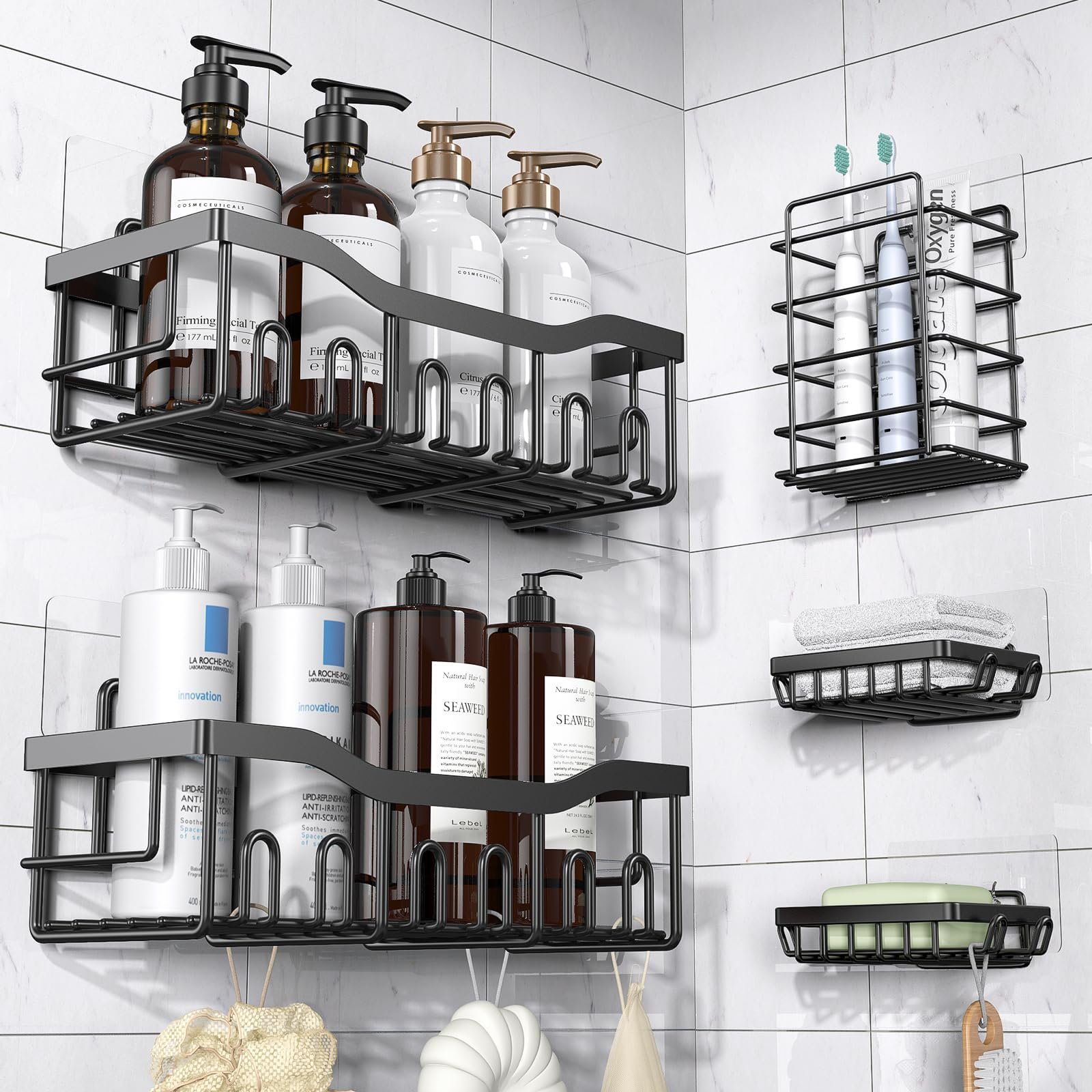
EUDELE Adhesive Shower Caddy, 5 Pack Rustproof Stainless Steel Bath Organizers
$17.24
No-drilling shower storage that keeps daily essentials organized in the one place you actually use them. Multiple caddies mean you can outfit your entire shower system without cluttering the bathroom itself.
See Today’s Price →Above the toilet is another overlooked vertical opportunity. This space is high, visible but not focal, and perfect for storing items you need regularly but don't want on the counter. Floating shelves positioned above the toilet create storage without visual weight. They're elevated enough that they don't feel cramped, yet they're in the bathroom where you need them.
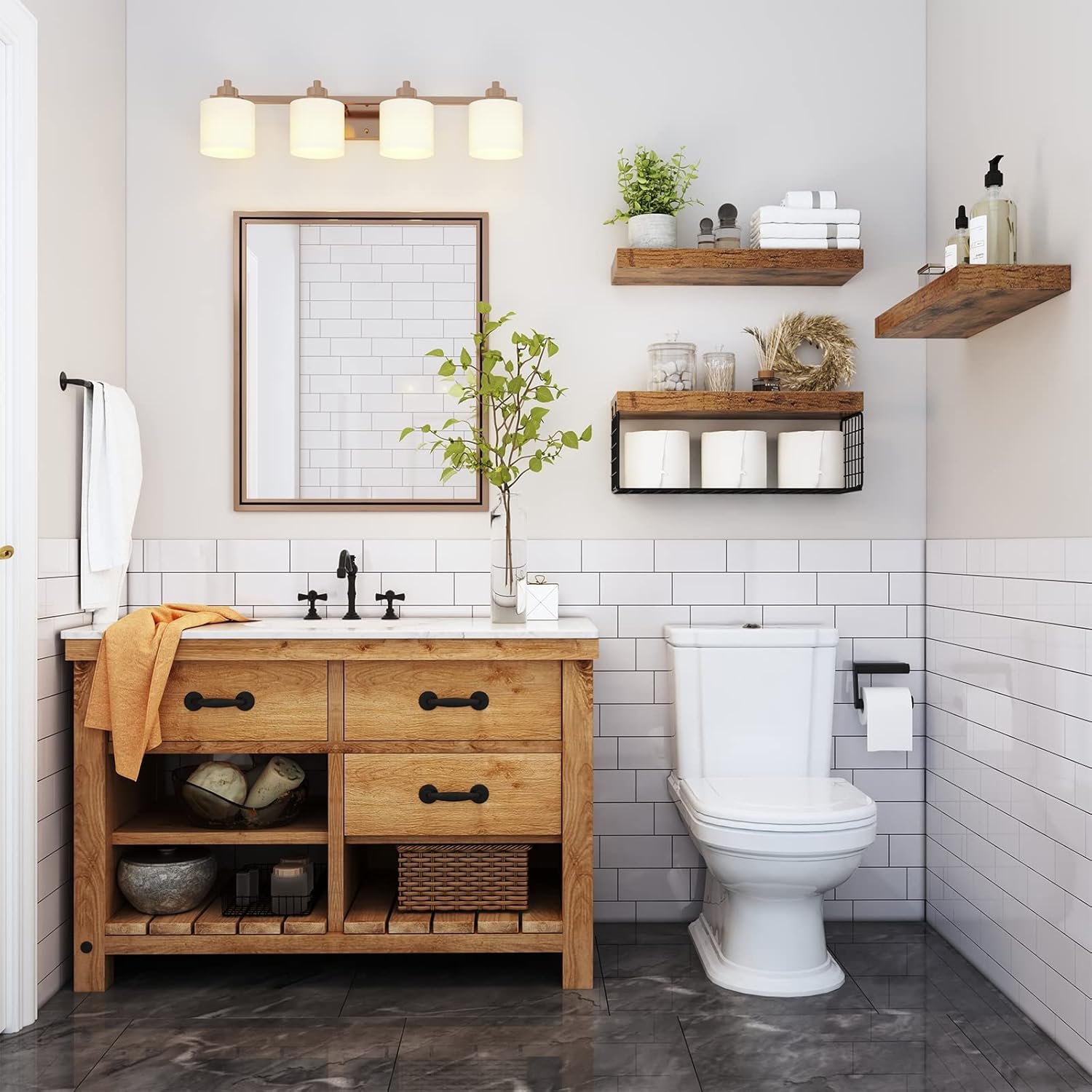
QEEIG Bathroom Shelves Over Toilet - Wall Mounted Floating Shelves
$23.14
This wall-mounted solution transforms dead space into functional storage for toilet paper, towels, and everyday items. It adds visual interest while keeping items accessible and out of the way.
See Today’s Price →Even within cabinets, vertical organization matters. Using risers, shelf dividers, and stackable containers transforms a flat cabinet shelf into a multi-level storage system. A single cabinet shelf can hold three times as many items when you think vertically—and paradoxically, the organization often looks less cluttered because items are tiered and compartmentalized.
The Psychology of Containers: How Cohesive Organization Calms the Mind
Have you noticed that stores with coordinated storage systems feel more peaceful than those with mismatched containers? There's a reason for this.
Humans have an innate drive toward visual coherence. When everything is the same color, size, and style, our brains register it as organized, even if the total volume of items is identical to a space with mismatched containers. This isn't superficial. It's neurological. Cohesion reduces cognitive load. Your brain knows the system at a glance.
This is why I'm passionate about investing in quality containers. Not expensive containers necessarily—affordable options exist—but containers that work together as a system. Whether you choose clear acrylic, frosted glass, ceramic, or woven baskets, pick one aesthetic and commit to it. Every container in your bathroom should feel like it belongs to the same family.
This approach serves two practical purposes beyond psychology. First, it makes inventory management easier. You can see what you have because everything is in matching containers. Second, it prevents the "I'll use this random jar for storage" impulse that leads to chaos. When you have a defined system, you're less likely to deviate from it.
The container system also creates accountability. It's easier to maintain organization when you've invested in quality storage—both financially and aesthetically. You're more likely to put items back where they belong because the system is intentional and visible.
Small Touches That Amplify the Effect: Risers, Rugs, and Intentional Styling
Organization is the foundation, but styling is what transforms a merely organized bathroom into a bathroom that feels like a sanctuary.
Risers—those small pedestals or stands—are underrated organizational tools. They serve a dual purpose: they elevate certain items off flat surfaces, creating visual interest and height variation, while also keeping those items contained and grouped. A soap dish riser keeps hand soap and a small towel from sprawling across the counter. It creates a dedicated zone.
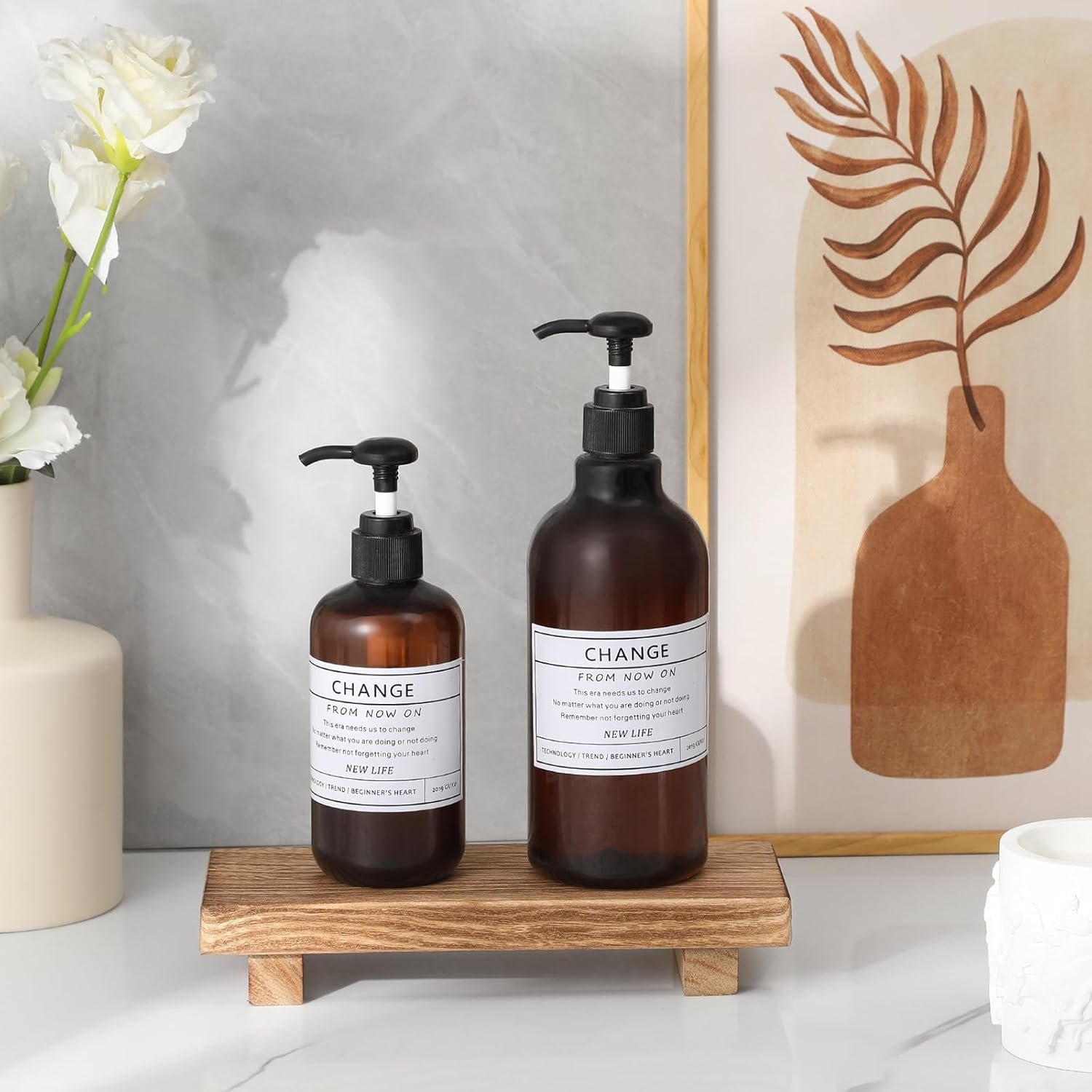
zoocatia Small Wood Tray Pedestal Stand Farmhouse Bathroom Decor
$7.18
This modest riser creates a styled vignette for soap, candles, or small bottles. It transforms basic products into intentional decor while keeping counter space organized and visually cohesive.
See Today’s Price →Rugs are another small touch with outsized impact. A quality bathroom rug defines the space, anchors the design, and creates a signal to your brain that this is a curated, intentional environment rather than a purely functional one. When you step onto a soft, textured rug, you're stepping into a space that's been thought through. This matters for your daily psychological experience more than most people realize.
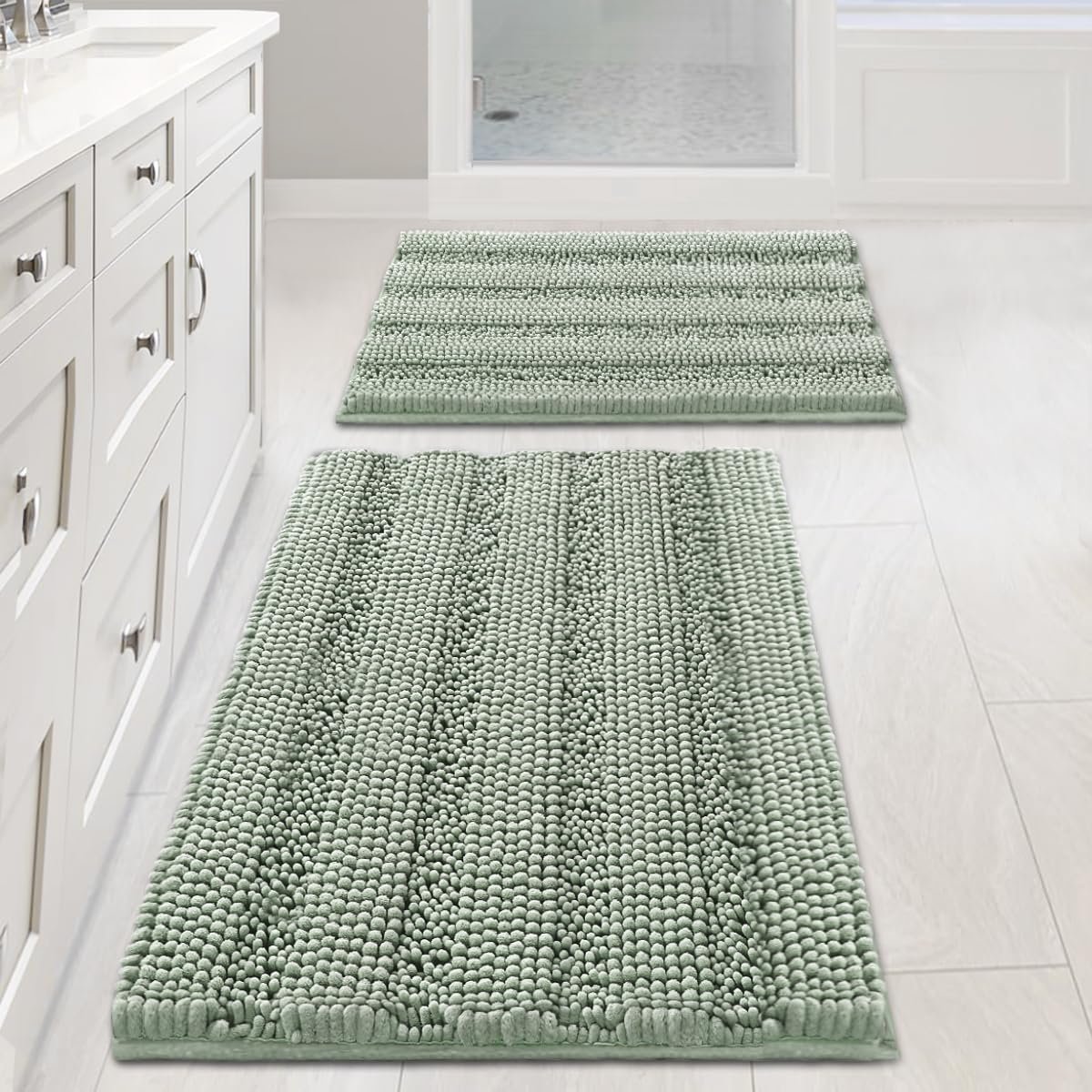
H.VERSAILTEX Sage Bathroom Rugs, Bath Mat Set of 2
$19.40
These thick, textured rugs ground the bathroom in comfort and cohesion. A quality bath mat isn't a luxury—it's a signal that your bathroom is a space worth investing in, which reinforces the organization systems you've built.
See Today’s Price →Intentional styling means choosing what's visible with care. If your daily-use zone includes a soap dispenser, toothbrush holder, and hand towel, make sure these items work aesthetically together. They don't have to match, but they should feel intentional. You're creating a vignette, not just a collection of necessities.
The same principle applies to what hangs on your walls. A bathroom without decoration can feel institutional. A single piece of art, a mirror with a quality frame, or even a well-chosen shelf can transform the space from purely functional to genuinely restorative.
Building Your Personal Storage Strategy: A Framework, Not a Formula
Here's where I want to be absolutely clear: there is no universal bathroom storage solution. What works for a family of four will fail for a single person. What works for someone with extensive skincare routines won't work for someone with a minimalist approach.
Instead of following a formula, build a framework specific to your life. Here's how:
Step One: Audit What You Actually Own
Spend a weekend pulling everything out of your bathroom. Every product, every tool, every item. Lay it on your bed or counter and actually look at what you own. Most people are shocked at the quantity. You'll probably find duplicates, expired products, and items you forgot you had. Discard what you don't use or need. This isn't minimalism for its own sake—it's clarity. You can't organize what you haven't seen.
Step Two: Categorize by Frequency and Ritual
Sort items into your personal hierarchy. What do you use every single day? What's weekly? What's monthly or seasonal? Be honest. If you haven't used something in a year, it doesn't need prime storage real estate.
Step Three: Map Your Bathroom Zones
Look at your bathroom layout. Where do you actually use items? Skincare happens at the sink. Hair care happens near the mirror. Showering happens in the shower. Medications might be accessed from the medicine cabinet. Map these zones and store items where they're used, not where you think they "should" go.
Step Four: Choose Your Storage Solutions
Based on your items and zones, choose storage that fits your space and aesthetic. Don't buy everything at once. Start with the high-impact solutions: a shower caddy for shower items, wall-mounted shelving for visibility, and proper cabinet organization for hidden items. Add refinements as needed.
Step Five: Commit to Maintenance
This is the step most people skip, and it's why their systems fail. A storage system only works if you maintain it. Spend five minutes each week putting things back where they belong. Once a month, review your categories and adjust as needed. This isn't burdensome—it's actually less work than living with chaos, which requires daily decision-making and hunting for items.
"The difference between a bathroom that feels spacious and one that feels cramped isn't square footage—it's the