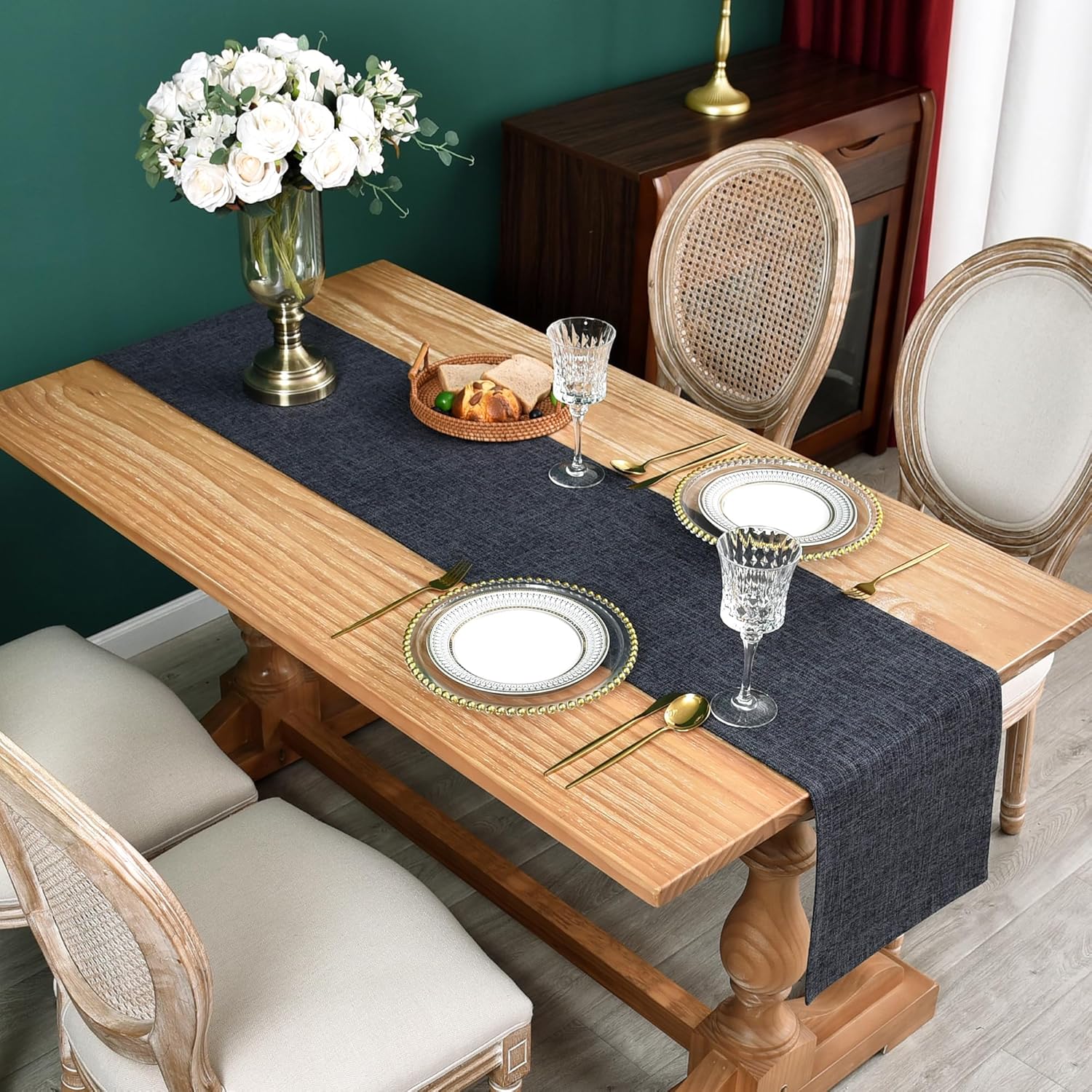
Style Your Dining Table: 4 Industrial Table Runner Ideas Under $35
Your dining table deserves to be a statement piece—not just a surface for plates and napkins. If you're drawn to the raw, honest aesthetic of industrial design but think it requires a major renovation, think again. The secret? A quality table runner in the right fabric and color can completely transform your dining space, and you don't need to spend a fortune to do it.
Industrial style is all about celebrating materials, texture, and functionality. Dark gray linen table runners are the perfect vehicle for this aesthetic because they're versatile, forgiving, and naturally evoke that urban-loft vibe. In this guide, I'll walk you through four distinct ways to style an industrial table runner—plus budget-friendly options that won't strain your wallet.
What Makes a Table Runner Industrial?
Before we dive into styling ideas, let's clarify what we're working with. An industrial table runner should have:
- Textured fabric: Linen, canvas, or raw cotton with visible weave rather than smooth, polished finishes
- Neutral, earthy tones: Charcoal gray, warm taupe, or deep black that ground the space
- Minimal embellishment: No frills or ornate patterns—clean lines are key
- Quality construction: Visible stitching, frayed edges, or raw hems add authenticity
A dark gray linen runner checks all these boxes and acts as a neutral anchor for your table setting. It won't compete with your dinnerware or centerpiece; instead, it creates a sophisticated foundation.
4 Industrial Table Runner Styling Ideas
1. Layer for Depth and Visual Interest
One runner is great. Two runners? That's where industrial luxury happens—without the luxury price tag. This technique, called runner layering, creates a dramatic focal point and is especially effective on longer tables.
Start with your dark gray linen runner as the base layer. Then, add a second runner in a contrasting texture: a black and white striped linen, or a raw cream canvas runner placed at a slight angle on top. The offset creates movement and depth, and the layering suggests intentional, curated styling.
Why this works: Layering prevents your table from feeling flat or one-note. It also allows you to swap out the top runner seasonally without replacing the entire look.
Pro tip: Keep both runners the same length for cohesion, and ensure the bottom layer is at least 2 inches wider so it peeks out from underneath.
2. Pair with Edison Lights and Metal Accents
Industrial design and vintage Edison bulbs are practically synonymous. If you have a pendant light hanging above your table, this styling approach is a no-brainer.
Position your dark gray runner down the center of the table, then add metal accents along its length: a wrought-iron candelabra, matte black candlesticks, or even simple galvanized steel vases. The metals should have a slightly weathered or matte finish—shiny chrome feels too modern.
Layer in warm white or amber Edison-style string lights or bulbs overhead or draped along a window nearby. The combination of the textured gray runner, matte metals, and warm lighting creates an authentic, moody industrial atmosphere that feels upscale but approachable.
Why this works: Metals reflect and play with light, creating visual depth. Edison bulbs add warmth to an aesthetic that could otherwise feel cold or sterile.
3. Create an Urban Loft Look with Concrete and Wood
This approach plays with materials. Pair your dark gray runner with a reclaimed wood dining table (or wood that has a weathered, rustic finish). The gray runner echoes the concrete tones often found in urban lofts, while the wood adds warmth and organic texture.
Accessorize with concrete or cement-finish planters, industrial wire baskets for bread or napkins, and a simple black metal cutlery caddy. If your table has exposed wood grain or a distressed finish, the gray runner will highlight those natural imperfections beautifully—imperfections are a feature in industrial design, not a flaw.
Why this works: The juxtaposition of cool gray and warm wood is visually balanced. Neither overpowers the other, and together they feel authentic to industrial aesthetics without appearing cold or unwelcoming.
4. Minimalist Approach for Small Spaces
If you're working with a compact dining area, you don't need layers or maximalist styling. Sometimes, less is more.
Place a single dark gray linen runner down the center of your table, then keep everything else intentionally sparse: two simple black-and-white ceramic plates, a single bud vase with a stem of eucalyptus or a few branches, and minimal glassware. The negative space around the runner actually emphasizes it, making it feel like a deliberate design choice rather than tablecloth filler.
This approach is ideal for Scandinavian-industrial hybrids or anyone who loves clean, breathing spaces. It also makes your small table feel larger because visual clutter is minimal.
Why this works: In a compact space, every object should earn its place. A minimal setup with a quality runner as the focal point feels intentional and sophisticated rather than bare.
Choosing the Right Industrial Table Runner
When shopping for a dark gray linen runner under $35, prioritize quality over quantity. Look for:
- 100% linen or linen-blend: Avoid synthetic blends that feel plastic-y
- Medium to dark gray: Charcoal reads better in photos and coordinates with more color palettes
- 12–16 inches wide: Wide enough to feel intentional, narrow enough for intimate place settings
- Visible stitching or frayed edges: These details signal quality and authenticity
A well-made linen runner in this price range will last for years and only improve with age as the fabric softens and develops a lived-in patina.
Styling Across Seasons
Industrial style is timeless, but you can shift the mood seasonally by changing accessories while keeping your dark gray runner as the constant:
- Spring/Summer: Pair with white or cream linens, fresh flowers, and brighter metals
- Fall: Add deep burgundy napkins, amber glass, and warmer lighting
- Winter: Layer in black or charcoal textiles, and use cooler-toned metals
The runner stays put while everything else transforms—a smart, budget-conscious approach to keeping your dining table fresh.
Conclusion
Styling an industrial dining table doesn't require expensive renovation or design expertise. A quality dark gray linen runner under $35 is the foundation of a look that feels curated, intentional, and utterly current. Whether you layer, add metallic accents, play with wood and concrete, or embrace minimalism, your table becomes a reflection of your design sensibility.
The beauty of industrial design is that it celebrates authenticity and imperfection. There's no "wrong" way to arrange it—only ways that feel true to you. Start with a runner you love, then build your aesthetic around it. Your dining table is waiting to be discovered.