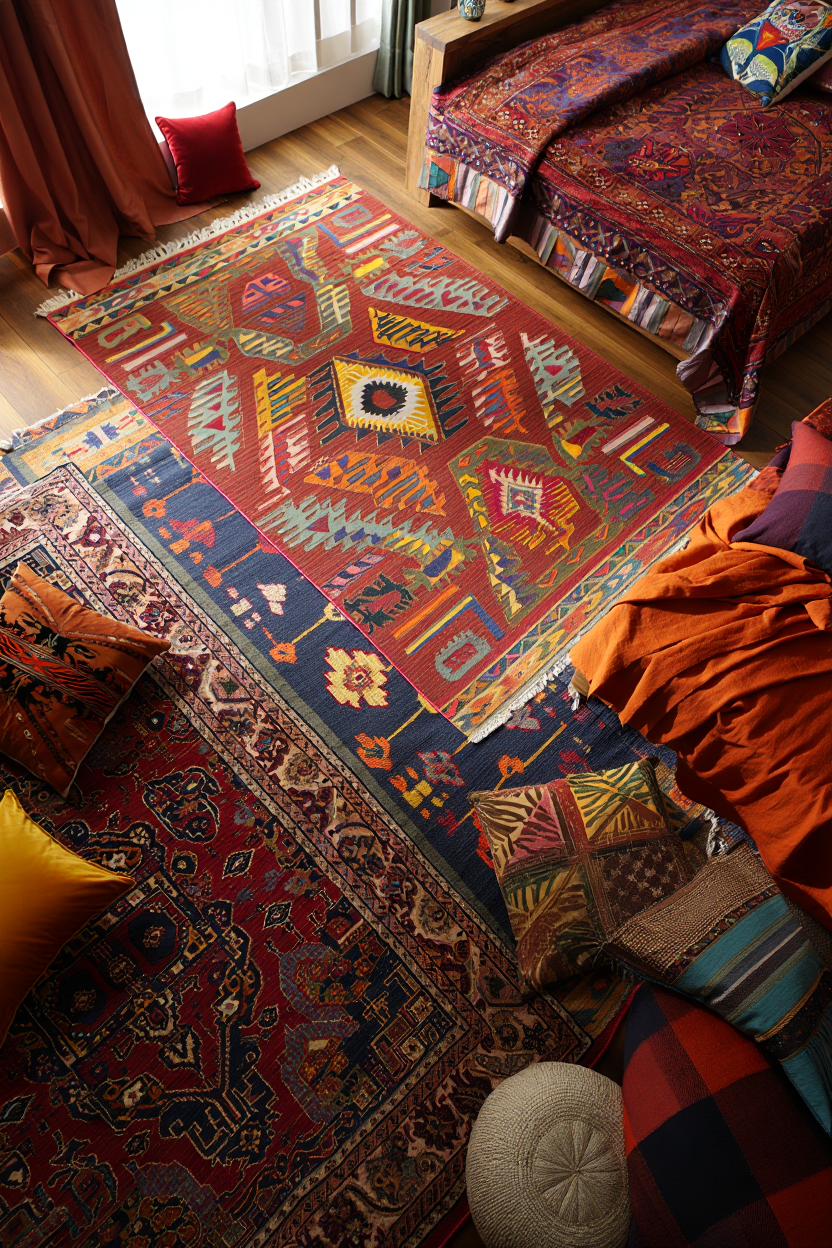
Mix Patterns Like a Designer: 5 Eclectic Rug Layering Ideas for Your Bedroom
Rug layering used to feel like an advanced design move—something only interior designers could pull off without the room looking chaotic. But here's the truth: mixing patterns is actually one of the easiest ways to add personality and depth to your bedroom without breaking the bank. The secret isn't choosing matchy-matchy rugs; it's understanding which patterns work together and why.
If you've been hesitant to try layered rugs because you worry about clashing patterns, this guide is for you. We're breaking down five proven eclectic rug combinations that work beautifully together, all built on affordable options under $35 that you can find right now.
Why Rug Layering Works in Bedrooms
Before we dive into specific combinations, let's talk about why layering rugs actually transforms a bedroom. A single large rug can feel flat and one-dimensional. But when you layer a smaller patterned rug on top of a textured base rug, you create visual interest, define the space around your bed, and add warmth underfoot. Plus, layering lets you experiment with bold patterns in a controlled way—if one pattern feels too much on its own, adding a complementary pattern beneath it suddenly makes it feel intentional and curated.
The best part? You can achieve this look affordably. Eclectic doesn't mean expensive; it means intentional.
The 5 Rug Combinations That Always Work
1. Geometric Base + Global Accent
Start with a neutral geometric rug in gray or cream as your foundation layer. Geometric patterns are grounding—they won't compete with what comes on top. Then layer a smaller rug with global-inspired prints: think Moroccan, Turkish, or Indian textiles. The geometric base keeps things calm while the patterned accent rug brings in color and worldly character.
Why it works: Geometric and global patterns speak different visual languages, so they complement rather than compete. The geometric foundation prevents the room from feeling too busy.
2. Solid Neutral + Boho Textured
This is the safest entry point for pattern mixing. Layer a solid-colored rug (cream, taupe, or soft gray) with a boho textured rug featuring woven details or subtle fringe. The solid grounds the space while the boho texture adds dimension and personality without pattern overload.
Why it works: Texture reads differently than pattern to the eye. A textured rug feels less busy than a printed one, so you get visual interest without visual chaos.
3. Tribal Print + Botanical Print
This combination works because both prints pull from natural, organic inspiration—just different sources. A tribal-patterned base rug (geometric, earthy tones) paired with a botanical accent rug (leaves, botanicals, soft colors) creates a cohesive aesthetic that feels collected over time rather than matchy.
Why it works: Both patterns share a natural sensibility and often overlap in color palettes. This creates harmony even though the patterns are visually distinct.
4. Vintage-Inspired + Modern Minimal
Layer a vintage or distressed-looking rug with muted, faded colors underneath a smaller modern, minimalist-patterned rug in black and white or jewel tones. The vintage base feels organic and lived-in, while the modern top adds contemporary polish.
Why it works: Vintage patterns have natural color variation and visual "noise," which makes them great bases. Modern minimal patterns on top feel intentional and fresh by contrast.
5. Jewel-Tone Solid + Metallic + Earth-Tone Print
For the bolder designer, layer three elements: a jewel-toned solid (emerald, sapphire, or burgundy) as your base, add a runner or smaller metallic-accented rug, then top with an earth-tone patterned rug. This creates rich depth and sophistication—surprisingly, it works because each layer serves a different visual purpose.
Why it works: The jewel tone adds richness, the metallic bridges the colors, and the earth-tone pattern ties everything back to nature. It's complex but coherent.
Three Rules for Mixing Patterns Successfully
Rule 1: Vary the Scale
If your base rug has small geometric patterns, choose an accent rug with larger, bolder patterns—or vice versa. This visual contrast prevents your eye from getting confused. Different scales automatically look intentional.
Rule 2: Keep a Color Bridge
Make sure your rugs share at least one color in common. If your base is gray and cream, your accent rug should incorporate at least one of those colors. A color connection makes even wildly different patterns feel cohesive.
Rule 3: Let One Be the Star
You can have two patterned rugs, but make one quieter and one bolder. The quiet one plays supporting role; the bold one gets attention. This prevents visual competition and makes the space feel designed, not accidental.
Finding Affordable Layered Rugs Under $35
The best part about rug layering is that you don't need luxury rugs for it to look incredible. Budget-friendly, eclectic patterned area rugs in the under-$35 range are everywhere right now. Look for:
- Geometric designs in neutral palettes—perfect bases for layering
- Global-inspired prints with ethnic patterns and warm color palettes
- Botanical and nature-inspired patterns that feel organic and collected
- Vintage-look rugs with faded or distressed finishes for that lived-in feel
- Textured woven rugs that add depth without competing patterns
The key is choosing pieces that feel like you've curated them over time, not grabbed them all at once. Embrace mismatched sizes, slightly different color tones, and mixed textures. That's what makes eclectic layering feel authentic and designer-approved.
Start Small
If you're new to pattern mixing, don't overthink it. Start with one solid base rug and one patterned accent rug. Once you see how they work together, you'll gain confidence to experiment with bolder combinations. The beauty of rug layering under $35 is that if you change your mind, you haven't invested much. You can swap, reorganize, and play until you find your perfect combination.
The bedroom is the perfect place to experiment with eclectic style—it's your private retreat, so it should feel deeply personal. Patterned rug layering is one affordable, accessible way to make your space tell your story.