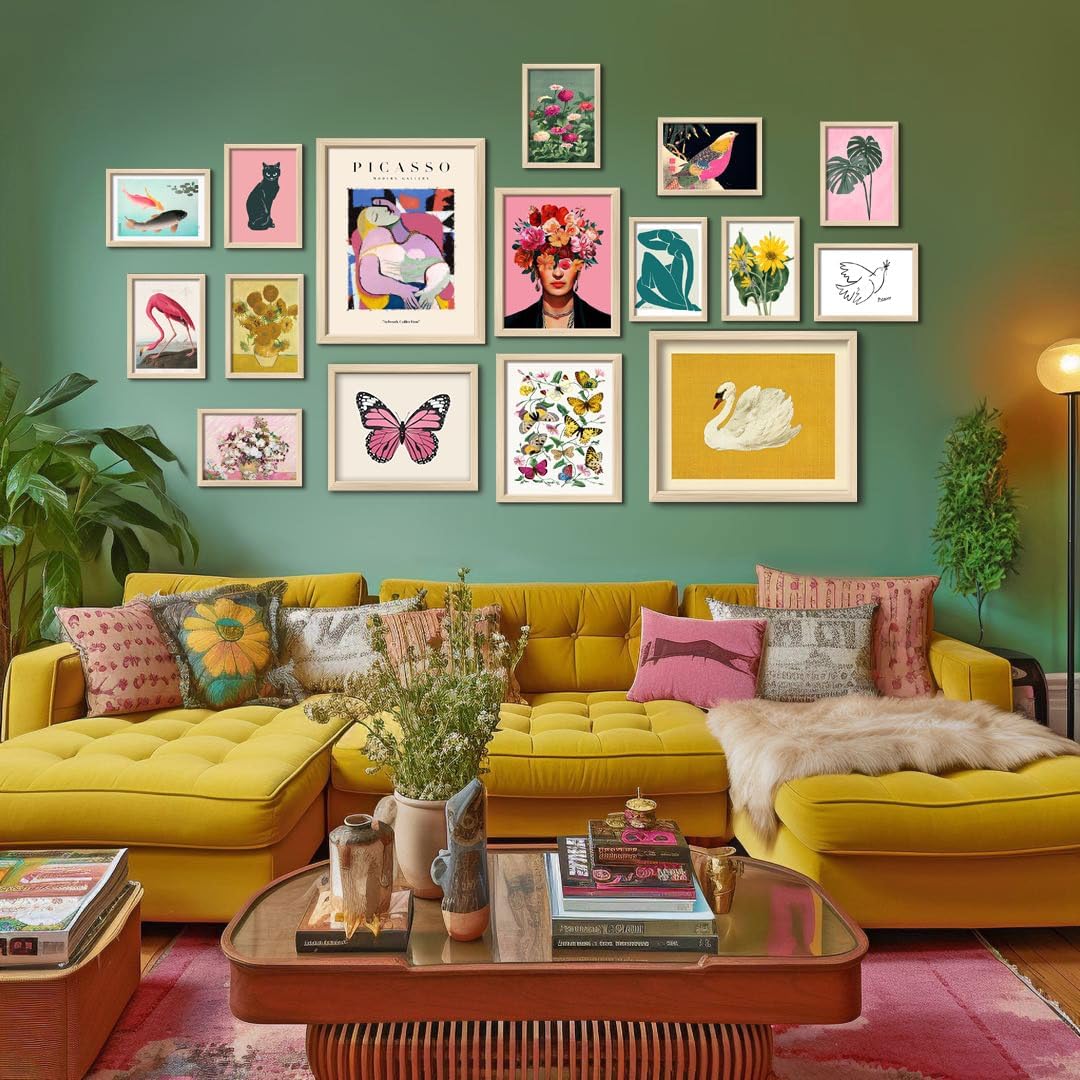
Mix & Layer Gallery Walls: Eclectic Art Prints That Feel Collected & Curated
There's something magical about walking into a room and seeing a gallery wall that stops you in your tracks. Not because it's perfectly symmetrical or matches a design mood board, but because it tells a story. It feels like the homeowner has traveled the world, collected pieces over years, and thoughtfully arranged them to create something uniquely personal.
The good news? You don't need decades of collecting or a design degree to create that same effect. A well-planned eclectic gallery wall is one of the most achievable and impactful ways to transform a living room, bedroom, or entryway. Let's break down how to do it right.
Why Eclectic Gallery Walls Work
An eclectic gallery wall succeeds because it embraces intentional diversity. Instead of matching frames or a cohesive color palette, you're layering prints with different sizes, styles, and subjects in a way that feels cohesive through composition alone.
This approach has several advantages:
- It's forgiving. Mistakes feel intentional in an eclectic mix.
- It's budget-friendly. You can mix affordable prints ($15–$35 each) without worrying about investing in a matched set.
- It's personal. There are no rules about what "belongs" together, so your collection can genuinely reflect your taste.
- It grows with you. You can add, remove, or swap pieces as your style evolves.
Step 1: Choose Your Color Palette (But Keep It Flexible)
Start by selecting a loose color story, even if it feels contradictory. This doesn't mean every print needs to match—it means the overall wall shouldn't feel chaotic.
Some strong approaches:
- Jewel tones + earth tones: Deep emeralds and sapphires mixed with terracotta, olive, and cream.
- Warm neutrals + one bold accent color: Beige, cream, and gray with pops of rust or mustard.
- Pastels + black & white: Soft blush, sage, and lavender balanced with monochromatic prints for contrast.
- Primary colors + natural wood tones: Bold reds, blues, and yellows grounded with tan and walnut frames.
Pro tip: Lay all your prints out on the floor before hanging anything. This gives you a chance to see how colors interact and swap pieces without putting holes in your wall.
Step 2: Mix Sizes and Orientations
The key to avoiding a "cluttered" look is varying your frame sizes strategically. A good mix typically looks like this:
- 2–3 large anchor prints (16x20" or larger)
- 4–6 medium prints (8x10" or 11x14")
- 3–4 small accent prints (5x7" or smaller)
Arrange them so the largest pieces don't all cluster in one corner. Think of it like creating visual balance through the whole wall, almost like you're arranging furniture in a room. Your eye should move around the wall naturally, not get stuck in one spot.
Also, mix portrait and landscape orientations. A wall with all vertical prints feels stiff; alternating creates rhythm and visual interest.
Step 3: Combine Different Print Types and Subjects
This is where eclectic really shines. You're not limited to one aesthetic. Try combining:
- Bold abstract patterns with botanical line drawings
- Vintage-style posters with contemporary geometric art
- Cultural and global-inspired prints (Moroccan patterns, Indian textiles, Japanese woodblocks) with modern minimalist designs
- Typography and quotes mixed with landscape or still-life imagery
- Colorful illustrated pieces balanced by black & white photography or engravings
The unifying force isn't sameness—it's intentionality. Each piece should be something you genuinely love, and together they should feel like they belong to the same collection (even if they don't match).
Step 4: Frame Strategy Matters
You have two solid options here: match your frames, or mix them with intention.
Matching frames (even if they're simple black, white, or natural wood) instantly organize visual chaos. This is an excellent choice if your prints are very varied in color and style.
Mixed frames can work beautifully if you stick to a material theme. Try combining different wood stains together, or mixing black metal frames with white ones. The key is having some visual consistency in the frame family, even if individual sizes vary.
Avoid mixing too many frame styles or materials (like pairing thick gold frames with thin silver ones with wooden ones). This tips the scale from "eclectic" into "accidentally mismatched."
Step 5: The Layout Approach
There are two main ways to arrange an eclectic gallery wall:
- Salon style (organic): No grid, pieces positioned at varying distances with a flowing, curated feel. This works best when your room has asymmetrical wall space.
- Loose grid (structured eclectic): Pieces roughly follow horizontal rows or a loose grid, but with intentional spacing irregularities. This feels organized without being rigid.
For most living rooms, a loose grid works beautifully—it gives your wall a composed, intentional look while still feeling relaxed and personal.
Bringing It All Together
The most stunning gallery walls aren't the ones where every frame matches or every print cost $200. They're the ones where someone clearly made thoughtful choices, mixed unexpected elements, and created something that makes visitors stop and ask, "How did you put this together?"
Start by gathering prints you genuinely love—whether that's bold botanical illustrations, global-inspired patterns, or minimalist typography. Look for affordable, high-quality art prints under $35 each that speak to your style. Lay them out, play with the arrangement, and don't be afraid to swap pieces until the composition feels balanced.
Your gallery wall should feel like a love letter to your taste, not a test of your interior design skills. When you approach it that way, eclectic almost always works.