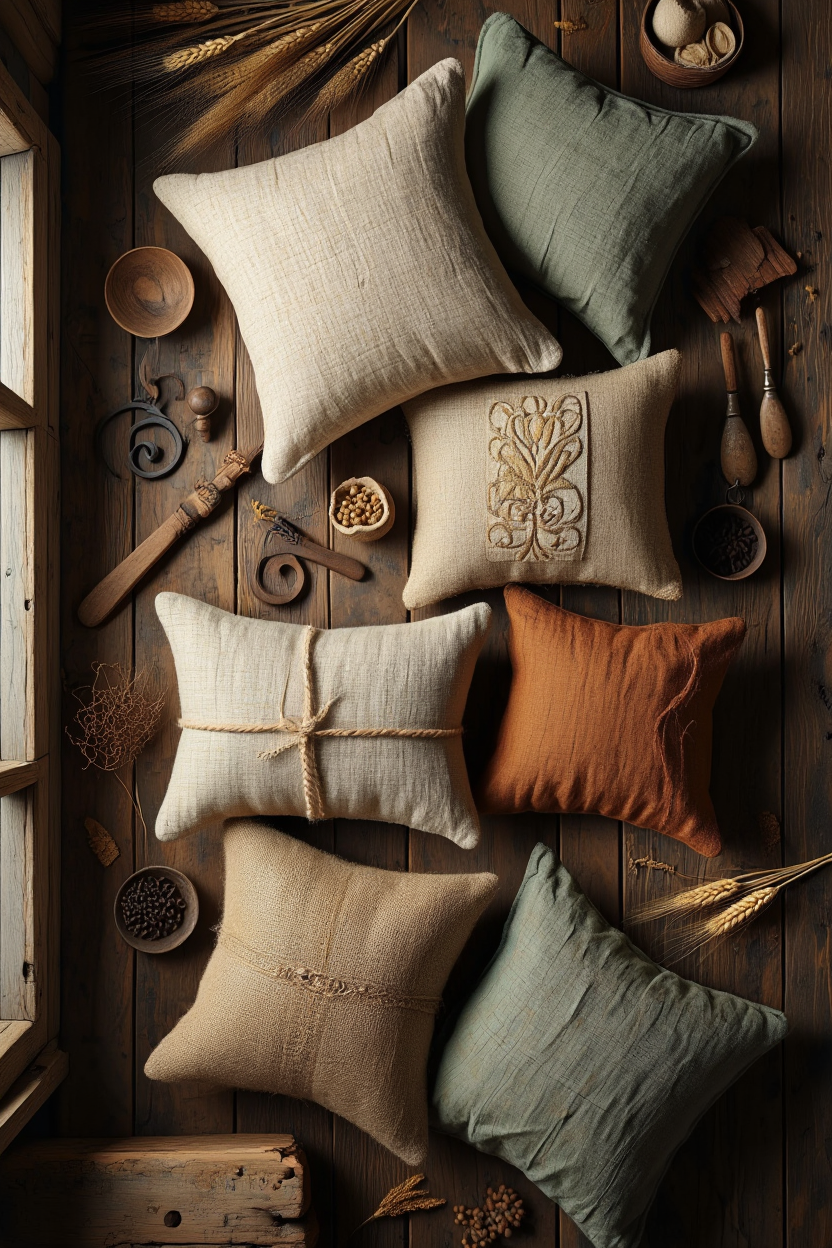
Master Pillow Layering: 5 Farmhouse Accent Pillows That Make Living Rooms Feel Lived-In
There's something magical about a sofa that looks like it's been styled by someone who actually *lives* there—not by a furniture showroom designer. The secret? Strategic pillow layering.
If you've ever wondered how to achieve that effortlessly curated farmhouse look without spending hundreds of dollars, you're in the right place. In this guide, we'll walk through the art of pillow layering using five affordable, rustic styles that work together to create depth, texture, and that coveted "collected over time" aesthetic your living room deserves.
Why Pillow Layering Matters (Beyond Just Looking Pretty)
Pillows aren't just decorative—they're the fastest, cheapest way to transform a room's entire vibe. Unlike repainting walls or replacing furniture, pillows let you experiment with color, texture, and pattern without commitment. They're also highly functional: layered pillows actually make your sofa more comfortable to use, not less.
The farmhouse aesthetic specifically thrives on layering because it mimics the "collected" feel of vintage, hand-picked pieces. When done right, your sofa tells a story instead of looking like a catalog spread.
The 5 Pillow Styles That Work Best Together
1. Neutral Linen Pillow (Your Foundation)
Start with a solid, quality linen pillow in cream, oatmeal, or soft gray. Linen is the workhorse of farmhouse style—it's natural, slightly textured, and reads as "intentional" without trying too hard.
Why it works: Linen anchors your entire layering scheme. It plays well with every other texture and pattern you'll add, and it feels substantial without being heavy.
Pro tip: Buy at least two in the same color and size. Symmetry is your friend—use matching linens as your "bookends" on either side of the sofa, then layer contrasting textures in the middle.
2. Burlap or Jute-Textured Pillow (Add Rustic Depth)
This is where texture enters the conversation. A burlap or woven jute pillow adds visual interest and tactile contrast to smooth linen. The natural, rough finish screams "farmhouse" without being costume-y.
Why it works: Burlap reads as vintage and collected. It also bridges neutral tones beautifully—place it between your linen pillows to create a visual rhythm.
Pro tip: Mix burlap with linen of similar colors (cream with cream, gray with gray). This keeps the look cohesive instead of chaotic.
3. Embroidered or Stitched Detail Pillow (Bring in Personality)
A pillow with subtle embroidery, hand-stitched details, or simple monogramming adds craft and personality. Think delicate florals, botanical motifs, or farmhouse-style text like "home" or "gather."
Why it works: Embroidery signals that your style is thoughtful and personal. It's the detail that makes the entire arrangement feel intentional rather than random.
Pro tip: Stick to one embroidered pillow per sofa section. Too many competing patterns will feel cluttered. One statement piece is perfect.
4. Patterned Accent Pillow (Introduce Subtle Pattern)
A small check, subtle gingham, or classic farmhouse stripe in muted tones (think cream, taupe, or soft sage) adds visual movement without overwhelming. This is where you can introduce a secondary color if your room needs it.
Why it works: Patterns prevent the arrangement from feeling too monochromatic. A single patterned pillow mixed into neutrals looks collected; too many patterns look chaotic.
Pro tip: Choose patterns with the same color family as your linen base. A cream pillow with a taupe and cream stripe feels intentional; a multicolored pattern can feel random.
5. Velvet or Corduroy Pillow (Add Luxury Texture)
A single pillow in soft velvet or corduroy—in champagne, dusty rose, or sage—adds richness and a subtle hint of luxury without feeling overdone. This is your "splurge" piece that makes the whole arrangement feel elevated.
Why it works: Velvet and corduroy catch light differently than linen or burlap, creating visual depth. They also feel nice to touch, which makes your sofa more inviting.
Pro tip: Keep the color subtle. A muted sage or soft champagne velvet fits farmhouse style; bright jewel tones can feel too formal or modern.
How to Actually Arrange These Pillows
For a standard three-cushion sofa:
- Outer edges: Neutral linen pillows (your anchors)
- Inner sections: Alternate burlap, embroidered, and patterned pieces
- Center (optional): Your velvet or corduroy piece for a luxury focal point
For a sectional or larger sofa: Repeat the pattern. Use pairs of the same pillow to create balance, then break symmetry with texture and pattern in the middle.
General layering rules:
- Vary pillow sizes. Mix 16-inch, 18-inch, and 20-inch pillows so heights don't feel uniform.
- Use odd numbers. Three or five pillows feels natural; four feels staged.
- Lean pillows slightly inward. This creates a relaxed, lived-in posture instead of perfect alignment.
- Layer from largest (back) to smallest (front). This creates visual depth and proportion.
Budget Breakdown (And Where to Find Them)
The beauty of this approach is the price point. You don't need luxury brands to achieve this look:
- Quality linen pillow: $15–$25
- Burlap or textured pillow: $13–$20
- Embroidered accent pillow: $18–$30
- Patterned farmhouse pillow: $14–$25
- Velvet or corduroy pillow: $20–$35
You can build an entire collection of five quality pillows for under $125—often much less if you catch sales or buy from budget-conscious brands that specialize in farmhouse style.
Final Thoughts: Your Sofa, Styled
Pillow layering is one of the easiest, most rewarding ways to make your living room feel intentional and collected. By combining neutral linens, rustic textures, subtle patterns, and one luxury touch, you create a space that feels both curated and livable—the hallmark of true farmhouse style.
Start with these five styles as your framework, then adjust colors and textures to match your room's lighting and existing decor. The goal isn't perfection; it's creating a space that feels like *you*.