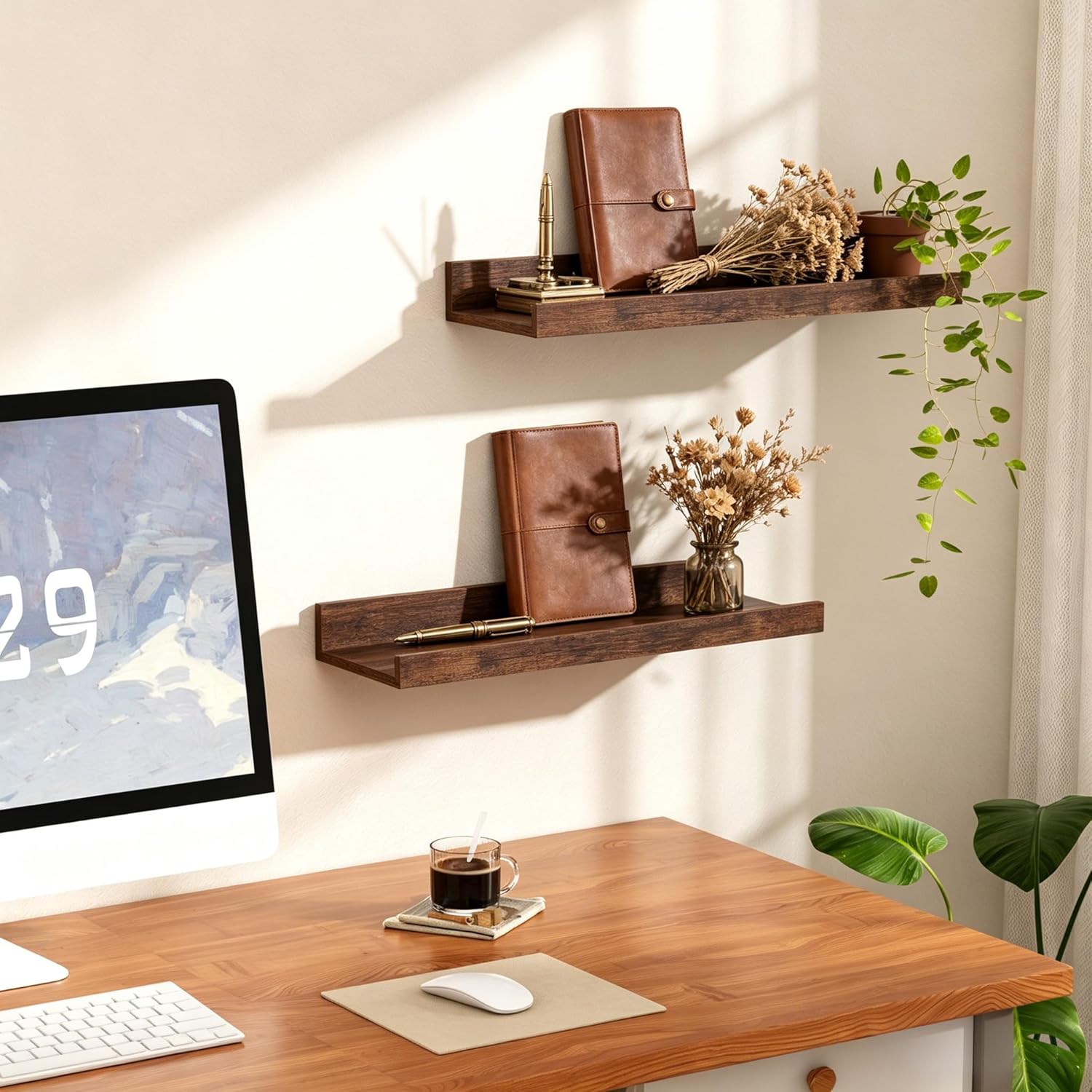
Master Open Shelving: 5 Layout Ideas That Make Small Living Rooms Feel Spacious
Open shelving has become a staple in modern home design, and for good reason. When done right, it can transform a cramped living room into a space that feels airy, intentional, and full of personality. The trick isn't just installing shelves—it's knowing how to arrange what goes on them.
If you've ever stood in front of bare floating shelves wondering what to do with them, or if you've seen beautifully styled shelves on Instagram that seem impossible to recreate, this guide is for you. I'm breaking down five proven layout formulas that work in small spaces, using affordable floating shelves and everyday decor items you probably already have at home.
Why Open Shelving Works in Small Living Rooms
Before we dive into specific layouts, let's talk about why open shelving is such a game-changer for smaller spaces. Unlike closed cabinets or bulky bookcases, floating shelves create visual continuity on your walls. They don't eat up floor space, and they allow light to flow through your room, making everything feel more open and less claustrophobic.
The key is balance. You want enough visual interest to keep the shelves from looking bare, but not so much that they feel cluttered. This is where layout strategy comes in.
The 5 Best Layout Formulas for Small Spaces
1. The Minimalist Rule of Three
This is the safest formula for beginners, and it works beautifully on floating shelves under $35 that you can find at most home retailers. The idea is simple: on each shelf, arrange three items of varying heights. Typically, this means one tall item (a small plant or sculptural piece), one medium item (a framed photo or decorative object), and one small item (a candle or book).
Leave plenty of negative space between items. This prevents the shelf from looking crowded and actually makes your room feel larger because your eye has room to rest.
Real example: On a 24-inch floating shelf, place a potted monstera (12 inches tall) on the left, a stack of three coffee table books in the center, and a small brass candle holder on the right. Leave at least 4-5 inches of empty shelf space between each item.
2. The Vertical Stack for Narrow Shelves
If your shelves are only 12-18 inches deep, embrace vertical stacking instead of spreading items out horizontally. Stack books flat, stand a small vase on top, and lean a framed print behind it. This creates depth without pushing items off the edge.
This layout is perfect for rental situations, too, since budget-friendly floating shelves are renter-approved and can be installed without permanent damage.
Real example: Create a stack of four books (8 inches tall), place a small succulent in a ceramic pot on top, and lean a 5x7 print against the back of the shelf. The print acts as a backdrop and anchors the arrangement.
3. The Bookend and Breathing Room Layout
This layout works particularly well when you have three shelves or more. Use matching bookends to frame one section of the shelf, then leave the rest open. This creates a sense of intentionality—like you *meant* for that space to be empty—rather than looking like you just didn't know what to do with it.
The breathing room is what makes small spaces feel spacious. Your eye appreciates the pause.
Real example: Install two matching brass bookends on the left side of your top shelf, stack 6-8 books between them, and leave the entire right half of the shelf empty. On the middle shelf, do the reverse: leave the left side open and cluster three potted plants on the right with a pair of bookends.
4. The Alternating Heights Pattern
Instead of trying to fit a perfect three-item arrangement on each shelf, vary the heights *across* multiple shelves. This creates a rhythm that's visually interesting without feeling busy.
Place a tall item (plant, lamp, or vase) on the top shelf on the left side. On the middle shelf, place a low arrangement (flat stack of books, a short candle, small trinay) toward the right. On the bottom shelf, go tall again but on the opposite side. This zigzag pattern draws the eye across the wall and makes the arrangement feel intentional and curated.
5. The Theme-Based Grouping Method
Instead of worrying about symmetry or height, organize by category: one shelf for plants only, one for books and a single sculptural piece, one for collected objects and photos. This approach works especially well if you already have items you love but weren't sure how to display them.
By grouping like items, you create pockets of visual coherence that actually simplify the overall look, even if individual shelves feel fuller.
Product Recommendations: Affordable Floating Shelves Under $35
The foundation of any good open shelving display is the shelf itself. Look for floating shelves in neutral colors (white, natural wood, or black) that complement your walls. Shelves in the 18-30 inch range work best for small living rooms because they don't overwhelm the space. Most quality floating shelves under $35 are made from MDF with metal brackets and can hold 15-25 pounds, which is plenty for books, plants, and decorative objects.
Choose shelves with a depth of 8-12 inches. Anything deeper eats up visual space; anything shallower limits what you can display. If you're renting, look for options specifically marketed as damage-free or temporary.
The Styling Essentials You'll Need
Beyond the shelves themselves, keep these items on hand for styling:
- Plants (real or faux): They soften hard lines and add life. One medium plant per shelf is usually enough.
- Books: Stack them flat or stand them upright with bookends. Vary the spines—colorful books add visual interest without clutter.
- Framed photos or art: Lean them casually or hang small prints above the shelves to anchor the display.
- Ceramics and glass: A single vase, bowl, or drinking glass adds texture and interest. Limit to one per shelf.
- Candles: They add warmth and a finished feel. Small, unlit candles work just as well as functional ones.
Common Mistakes to Avoid
Overstuffing is the #1 reason open shelving feels cluttered rather than curated. If you find yourself squeezing items in, step back and remove at least one piece from each shelf. You should always be able to see the back wall or shelving finish.
Matching heights perfectly across all shelves actually reads as monotonous. Aim for variety, not symmetry.
Finally, don't feel pressure to fill every inch. Empty space is part of the design.
Final Thoughts
Open shelving in a small living room isn't about having the perfect collection of designer objects. It's about arranging what you have—or what you love—in a way that feels intentional and makes your space feel larger. Start with one of these five layouts, style with items you already own, and adjust from there. Once you understand the principles, you can apply them no matter what's on your shelves.
Ready to get started? Pick up an affordable floating shelf (or three), choose your layout formula, and begin styling. You might be surprised at how much bigger and brighter your living room feels.