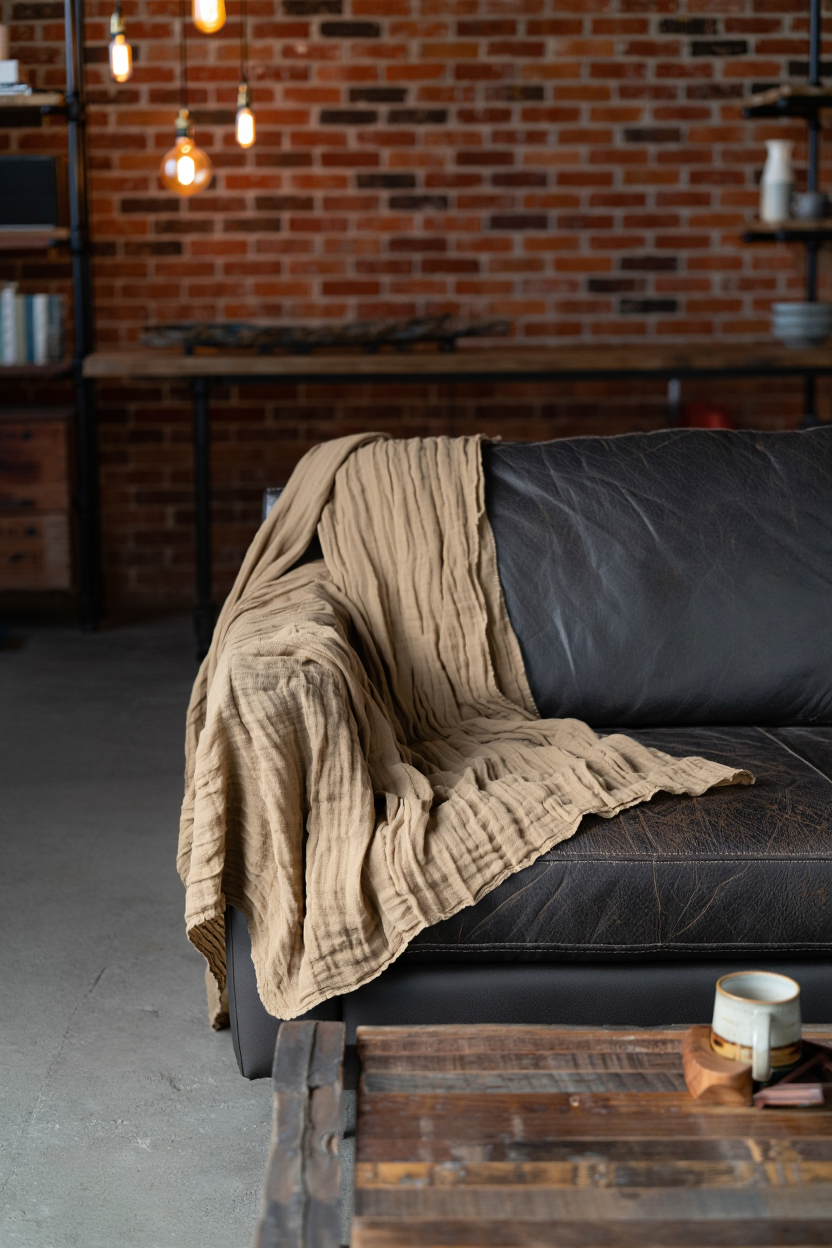
Layering Cozy Throws in Industrial Living Rooms: 4 Rules for Getting It Right
Industrial living rooms have a reputation for being cold and austere — all exposed brick, metal fixtures, and concrete floors. But here's the secret that interior designers know: the best industrial spaces are the ones that balance that raw edge with genuine comfort. And cozy throws are your secret weapon for achieving that mix.
The trick isn't to hide the industrial aesthetic under layers of softness. Instead, it's about intentionally layering lightweight blankets in a way that feels purposeful, textured, and inviting — not cluttered or out of place. When done right, throws become part of the design story, not a contradiction to it.
Let me walk you through the four rules I've learned from styling industrial spaces that people actually want to sit in.
Rule 1: Choose Lightweight, Breathable Fabrics That Don't Fight the Space
The biggest mistake people make is reaching for heavy velvet or chunky knit throws in industrial rooms. These materials feel too soft, too precious — they clash visually with exposed brick and steel beams.
Instead, opt for lightweight, breathable fabrics that have a more understated presence. Cotton muslin throws, linen blends, and gauze blankets work beautifully because they:
- Drape naturally without looking bulky or overstuffed
- Have a subtle texture that reads as tactile without being visually heavy
- Work across seasons — you're not committing to a heavy winter blanket year-round
- Feel genuine and unpretentious, which matches the industrial vibe
A 100% cotton muslin throw, particularly one with a 4-layer gauze weave, is ideal. The breathable construction means it won't overwhelm a room that already has strong architectural elements, and the natural cotton finish complements metal and concrete beautifully. You'll find quality options under $35, which means you can afford to buy multiple throws without breaking your budget.
Rule 2: Layer in Odd Numbers and Varying Textures
This is where styling gets intentional. Throw a single blanket over your couch and it looks like you forgot to fold it. Throw two blankets in identical materials and it looks staged. Layer three throws in complementary but different textures, and suddenly your seating area looks curated and lived-in.
Here's how to do it:
Start with a base layer in a neutral tone
Drape a light gray or cream cotton muslin throw across the back of your sofa or armchair. This becomes your anchor — the piece that will tie everything together. Position it so it looks casually placed, not perfectly folded.
Add a second layer in a complementary texture
Introduce a throw with a slightly different weave or finish — maybe a linen blend or a cotton throw with a subtle woven pattern. Layer it at a different angle or draped over the arm. The variation in texture catches light differently and adds visual interest without looking chaotic.
Consider a third layer in a deeper tone
If your room can handle it, add a third throw in charcoal, warm gray, or even a muted olive. This deeper tone adds depth and grounds the layering without introducing color that would feel out of place in an industrial setting. The key is restraint — stick with a neutral palette that lets the textures do the talking.
Rule 3: Position Throws to Emphasize Seating and Flow
Where you place your throws matters as much as which ones you choose. In industrial rooms, throws should guide the eye toward comfortable seating areas and create visual "landing zones" in an otherwise hard, angular space.
Drape throws over the back of sofas or armchairs at natural gathering points. Let one end cascade slightly toward the seat — this creates a visual invitation that says "sit here, this is comfortable." Avoid perfectly centering everything; asymmetry feels more organic and fits the industrial aesthetic better than symmetry ever will.
If you have multiple seating areas, layering throws at each one creates visual continuity while maintaining the sense of an industrial loft where comfort is secondary to design. This is the balance you're aiming for.
Rule 4: Keep the Color Palette Tight and Intentional
Industrial rooms already have a lot of visual weight from architectural elements — exposed beams, metal shelving, concrete walls. Adding a rainbow of throw colors will make the space feel scattered and chaotic.
Stick to a palette of three to four colors maximum. Creams, light grays, charcoal, warm taupe, and soft black work beautifully together. If you want to add subtle warmth, consider throws with a hint of linen texture or a barely-there natural undyed tone. These add personality without compromising the intentional, curated feel.
Metallics in your throws — think silver or bronze thread accents — can echo metal fixtures in the room and create sophisticated visual harmony. But again, keep it subtle. The throw should support the industrial design, not compete with it.
Making It Practical
The beauty of lightweight, breathable throws is that they're genuinely usable, not just decorative. You can actually reach for them when you're settling in to read or watch a movie, and they won't make you overheat. This practicality is part of what makes industrial living rooms feel like real homes rather than showrooms.
Look for throws that are machine washable and durable enough to withstand regular use. A quality cotton muslin throw will soften with washing and actually become more inviting over time.
The Result
When you layer throws with intention — choosing lightweight, breathable fabrics, varying textures, positioning them thoughtfully, and keeping your color palette cohesive — industrial living rooms transform from austere into genuinely inviting. You get the best of both worlds: the architectural drama of raw materials with the visual softness and comfort of well-chosen textiles.
Start with one quality throw in a neutral cotton muslin, then build your layers from there. You'll be surprised how much warmth and personality a few carefully chosen blankets can add to a space that's all about edge and attitude.